
Hosted Payment Gateway: Complete Guide for Retailers
November 24, 2025
Over eighty-five percent of american consumers now expect secure and seamless online payments every time they shop. The rise of hosted payment gateways has reshaped digital commerce, offering enhanced security for merchants and peace of mind for shoppers. Yet many business owners remain confused about how these systems truly work, and misconceptions around convenience, control, and compliance persist. This guide breaks down what hosted payment gateways actually deliver, untangling common myths while helping you understand their benefits and real-world impact.
Table of Contents
- Hosted Payment Gateway Explained and Misconceptions
- Types of Hosted Gateways and Key Features
- Integration With POS and eCommerce Platforms
- Security, Compliance, and Fraud Protection
- Costs, Processor Choice, and Key Considerations
- Hosted Vs. Self-Hosted Payment Gateways
Key Takeaways
| Point | Details |
|---|---|
| Importance of Hosted Payment Gateways | Hosted payment gateways enhance transaction security by redirecting customers to secure platforms, mitigating merchant liability for handling sensitive data. |
| Trade-offs Between Security and User Experience | While hosted gateways simplify compliance and security, they may add an extra step in the checkout process that could affect user conversion rates. |
| Integration Considerations | Businesses should prioritize compatibility and flexibility in integrating payment gateways with existing infrastructure to ensure efficient transaction processing. |
| Financial Implications | Consideration of all fees related to hosted payment gateways is crucial, as hidden costs and processor selections can significantly impact overall business expenses. |
Hosted Payment Gateway Explained and Misconceptions
A hosted payment gateway represents a critical digital infrastructure that enables secure online transactions by redirecting customers to a specialized payment processing platform. According to GeeksForGeeks, these gateways redirect customers from a merchant’s website to a payment service provider’s (PSP) secure platform for transaction processing, which offers significant advantages in security and compliance management.
The core mechanism of a hosted payment gateway involves transferring customers to a third-party payment page where sensitive transaction details are processed. UMA Technology highlights that while this approach ensures robust security and simplifies PCI DSS compliance, it potentially introduces an extra checkout step that might impact conversion rates. Retailers must carefully balance the security benefits against potential user experience considerations.
Key characteristics of hosted payment gateways include:
- Complete transaction security management by third-party providers
- Reduced merchant liability for handling sensitive payment information
- Simplified compliance with financial data protection standards
- Minimal technical integration requirements for merchants
Businesses considering a hosted payment gateway should evaluate their specific needs, understanding that while these solutions offer significant security advantages, they also introduce an additional step in the customer’s purchasing journey. Role of Payment Gateways: Complete Retail Guide provides deeper insights into selecting the right payment infrastructure for retail operations.
Types of Hosted Gateways and Key Features
According to GeeksForGeeks, payment gateways can be broadly categorized into three primary types: Hosted Payment Gateway, Self-hosted Payment Gateway, and API-hosted Payment Gateway. Each type offers unique characteristics designed to meet varying business requirements and transaction processing needs.
UMA Technology highlights that hosted payment gateways are particularly distinguished by their robust security mechanisms and simplified integration process. These gateways redirect users to a secure provider environment, effectively managing sensitive transaction data and reducing merchant liability for potential fraud.
Key features of hosted payment gateways include:
- Comprehensive transaction security management
- Reduced merchant responsibility for handling sensitive payment information
- Simplified PCI DSS compliance protocols
- Minimal technical integration complexity
- Enhanced fraud prevention mechanisms
Businesses evaluating payment gateway solutions should carefully assess their specific operational requirements. While hosted gateways offer significant security advantages, they may introduce additional checkout steps that could potentially impact customer conversion rates. 7 Types of Payment Gateways to Elevate Your Business provides further insights into selecting the most appropriate payment infrastructure for diverse business models.
Integration With POS and eCommerce Platforms
Integrating payment gateways with point-of-sale (POS) and eCommerce platforms requires strategic planning and understanding of different technical architectures. Smart Hosting highlights that platforms like WooCommerce support multiple gateway integration approaches, including hosted and direct payment methods, each with distinct advantages and implementation considerations.
The integration process involves careful assessment of platform compatibility, technical requirements, and merchant-specific transaction needs. Hosted payment gateways offer simplified integration by redirecting users to secure payment environments, which significantly reduces the technical complexity for retailers. This approach minimizes PCI compliance burdens and provides an additional layer of transaction security across different sales channels.
Key integration considerations for retailers include:

- Compatibility with existing eCommerce and POS infrastructure
- Seamless transaction routing across multiple sales channels
- Support for diverse payment method acceptance
- Real-time transaction reporting capabilities
- Minimal disruption to existing checkout workflows
Businesses seeking comprehensive payment integration solutions should prioritize flexibility and scalability. Payment Gateway Integration Guide for Omnichannel Retailers offers detailed insights into creating robust, adaptable payment ecosystems that can evolve with changing technological landscapes and consumer preferences.
Security, Compliance, and Fraud Protection
In the digital payment ecosystem, security represents the foundational cornerstone that protects both merchants and consumers from potential financial risks. Hosted payment gateways play a critical role in establishing robust multilayered security frameworks that safeguard sensitive transaction data through advanced encryption, tokenization, and real-time fraud detection mechanisms.
PCI DSS (Payment Card Industry Data Security Standard) compliance emerges as a non-negotiable requirement for businesses processing electronic payments. Modern hosted payment gateways dramatically reduce merchant liability by managing complex security protocols, implementing strict authentication processes, and maintaining comprehensive transaction monitoring systems that identify and mitigate potential fraudulent activities before they escalate.
Key security and compliance features include:
- End-to-end transaction encryption
- Tokenization of sensitive payment credentials
- Automated fraud screening and risk analysis
- Compliance with international payment security standards
- Secure data transmission across multiple channels
- Continuous monitoring and threat detection
Understanding the Importance of Payment Security provides retailers with deeper insights into developing comprehensive security strategies that protect their financial infrastructure while maintaining seamless customer experiences. By prioritizing advanced security frameworks, businesses can build trust, minimize risk, and create resilient payment ecosystems that adapt to evolving digital threats.
Costs, Processor Choice, and Key Considerations
GeeksForGeeks reveals that hosted payment gateways typically involve transaction fees ranging between 2-4%, presenting a critical financial consideration for merchants evaluating payment infrastructure. The total cost of implementation extends beyond simple percentage-based charges, encompassing setup fees, monthly maintenance costs, and potential additional transaction expenses that can significantly impact a business’s bottom line.
The processor selection process requires comprehensive analysis of multiple factors beyond mere pricing structures. UMA Technology emphasizes that merchants must carefully evaluate potential delays in external processing and the potential impact on overall user experience when choosing a payment gateway solution.
Key financial and processor selection considerations include:
- Transparent fee structures and hidden cost assessment
- Transaction volume and processing speed capabilities
- Compatibility with existing technological infrastructure
- Breadth of supported payment methods
- Scalability and future integration potential
- Customer support and technical assistance quality
Businesses seeking optimal payment gateway solutions should approach processor selection as a strategic investment. By conducting thorough due diligence and understanding the nuanced financial implications, retailers can design a payment ecosystem that balances cost-effectiveness with robust performance. Complete Guide to Credit Card Payment Gateways offers additional insights into making informed processor selection decisions that align with specific business requirements.
Hosted Vs. Self-Hosted Payment Gateways
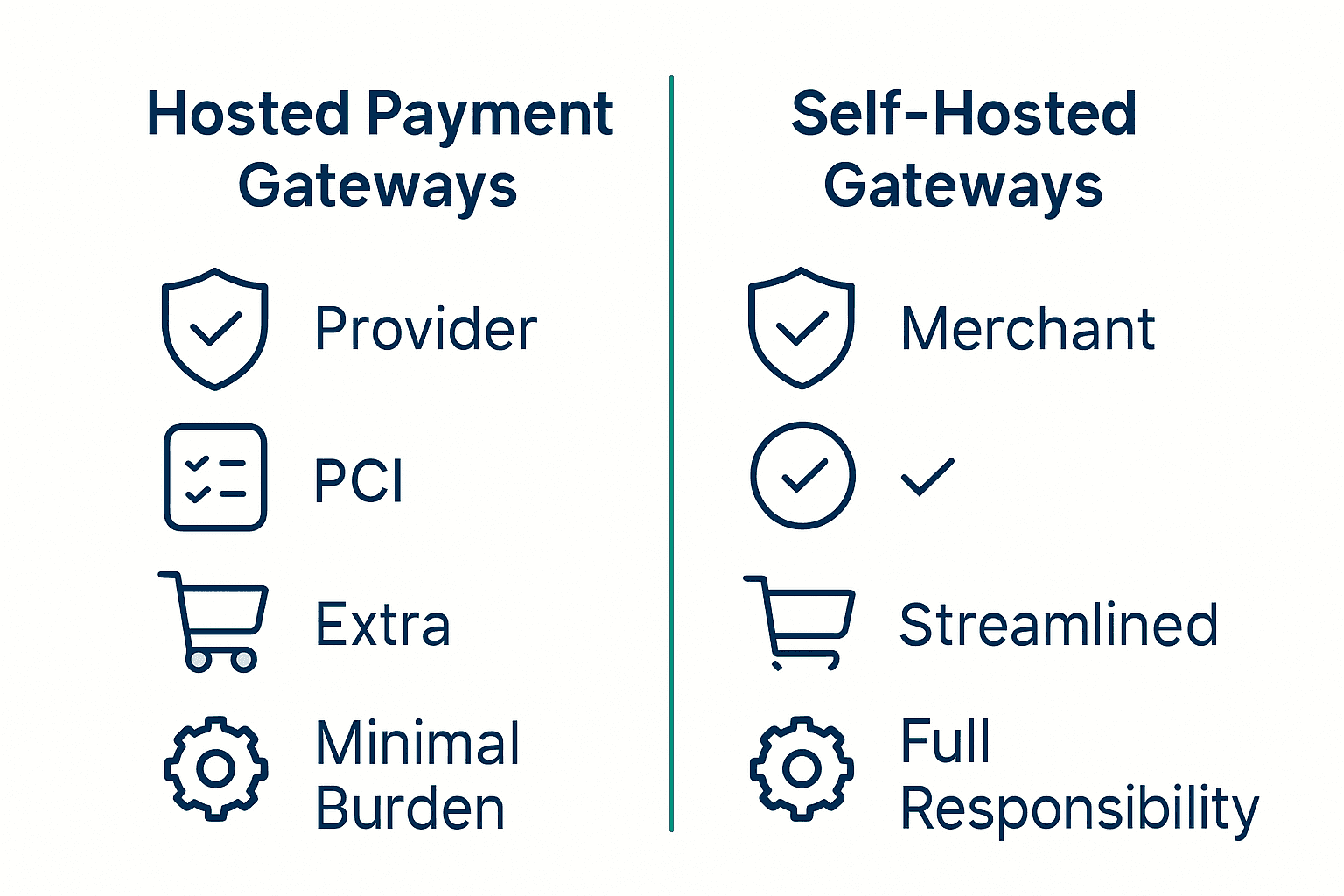
GeeksForGeeks provides critical insights into the fundamental differences between hosted and self-hosted payment gateways. Hosted payment gateways redirect customers to a third-party payment processing page, offering enhanced security and simplified compliance, while self-hosted gateways enable merchants to collect payment details directly on their website, providing a more streamlined checkout experience.
UMA Technology emphasizes that the choice between these gateway types involves carefully balancing security requirements, user experience, and technical complexity. Self-hosted gateways demand robust security protocols and strict PCI DSS compliance, placing more technical and legal responsibilities on the merchant, whereas hosted gateways manage these complexities on behalf of the business.
Key comparative aspects include:
- Security management complexity
- PCI DSS compliance requirements
- Customer checkout experience
- Technical integration effort
- Transaction processing speed
- Merchant control and customization potential
Understanding Payment Gateways: How They Power Secure Transaction offers retailers a comprehensive perspective on selecting the most appropriate gateway model. The decision ultimately depends on a business’s technological capabilities, risk tolerance, and specific transactional requirements, making it crucial to conduct thorough evaluations before implementation.
Elevate Your Retail Payments with SensePass Hosted Gateway Solutions
Navigating the complexities of hosted payment gateways to maintain robust security and seamless customer experience can be challenging. This guide highlights key issues like balancing PCI DSS compliance, transaction security, and minimizing checkout friction — all crucial for improving sales conversion rates and reducing operational risks. SensePass understands these critical needs and offers an omnichannel payment gateway platform tailored to meet the demands of modern retailers.
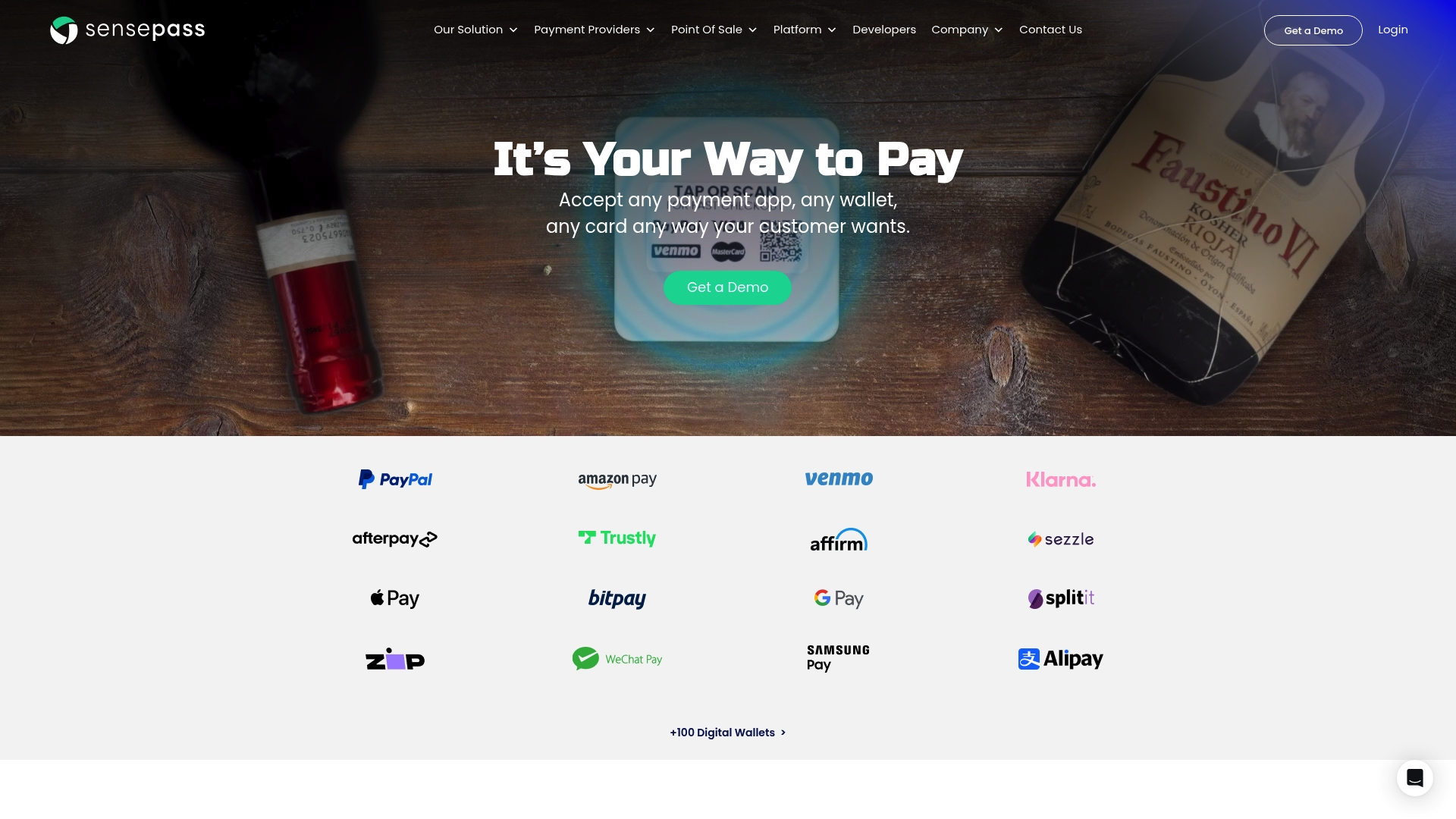
SensePass integrates effortlessly with top POS and eCommerce platforms such as NetSuite, Shopify POS, Oracle Xstore, Aptos, Magento, WooCommerce, and more. Your business can support an extensive array of payment methods including digital wallets like Apple Pay and Google Pay, BNPL options such as Klarna and Afterpay, crypto payments through Coinbase and BitPay, plus pay-by-bank solutions. Being processor-agnostic, SensePass empowers you to select from over 50 card processors ensuring ultimate flexibility and control over costs.
Ready to future-proof your payment infrastructure and delight customers with a secure, fast, and flexible checkout? Discover how SensePass can transform your payment ecosystem today by visiting SensePass.com. Find out more about integrating cutting-edge hosted gateways and unlocking omnichannel growth with our Payment Gateway Integration Guide for Omnichannel Retailers and Complete Guide to Credit Card Payment Gateways. Take the next step now and streamline your retail payments with confidence.
Frequently Asked Questions
What is a hosted payment gateway?
A hosted payment gateway is a service that securely processes online transactions by redirecting customers to a third-party payment processing platform, ensuring enhanced security and simplified compliance with financial standards.
What are the benefits of using a hosted payment gateway?
The key benefits include comprehensive transaction security management, reduced merchant liability for sensitive payment information, simplified PCI DSS compliance, and minimal technical integration requirements, making it a convenient option for retailers.
How does a hosted payment gateway affect the checkout experience for customers?
While hosted payment gateways provide robust security, they may introduce an additional step in the checkout process, which could potentially impact conversion rates. Retailers should weigh the benefits of security against possible effects on user experience.
What are the key differences between hosted and self-hosted payment gateways?
Hosted gateways redirect users to a secure third-party site for payment processing, easing security and compliance burdens, while self-hosted gateways allow merchants to collect payment information directly on their site, requiring more technical management and responsibility for compliance.
Recommended
- Credit Card Payment Gateway: Complete Retail Guide – Omnichannel payments at the Point Of Sale | Sensepass
- Payment Gateway Best Practices: Complete Guide – Omnichannel payments at the Point Of Sale | Sensepass
- Role of Payment Gateways: Complete Retail Guide – Omnichannel payments at the Point Of Sale | Sensepass
- 7 Types of Payment Gateways to Elevate Your Business – Omnichannel payments at the Point Of Sale | Sensepass

 New York Office
260 Madison Ave Suite 8018 New York NY 10016

