
Mobile Payment Technology: Streamlining Retail Transactions
February 4, 2026
Busy checkout lines and outdated payment terminals can frustrate customers and limit sales in even the most well-run American retail stores. With shoppers expecting fast, contactless payment options, the shift toward mobile payment technology is more than a trend—it is a necessity. By understanding the diverse digital transaction methods now accounting for 23 percent of all payments in 2024, retail businesses gain the insights needed to create a smoother, more secure purchasing experience across all channels.
Table of Contents
- Defining Mobile Payment Technology
- Types of Mobile Payment Methods
- How Mobile Payments Work in Retail
- Integrating Mobile Payments with POS Systems
- Risks, Security, and Compliance Standards
- Key Benefits for Retail Businesses
Key Takeaways
| Point | Details |
|---|---|
| Mobile Payment Technology Revolutionizes Transactions | Mobile payment technology enables secure, instant, and contactless transactions through various devices, dismantling traditional banking barriers. |
| Diverse Payment Methods Enhance Consumer Choices | Options such as digital wallets, peer-to-peer apps, and QR code payments offer flexible transaction experiences tailored to user preferences. |
| Integration with POS Systems is Essential | Successful mobile payment integration requires compatible hardware, software interoperability, and real-time processing to facilitate seamless transactions. |
| Security is Paramount for Trust | Implementing multi-factor authentication and strong encryption protocols is crucial for protecting customer data and maintaining confidence in mobile transactions. |
Defining Mobile Payment Technology
Mobile payment technology represents a digital financial ecosystem enabling secure transactions through smartphones, tablets, and other mobile devices. It transforms traditional payment methods by providing instant, contactless financial interactions that transcend physical payment infrastructure.
At its core, mobile payment technology functions as a digital multisided platform that enables financial transactions without conventional banking limitations. This innovative approach allows users to conduct financial exchanges through sophisticated digital networks, bypassing traditional monetary transfer mechanisms.
Key characteristics of mobile payment technology include:
- Instant digital transaction processing
- Secure encryption protocols
- Multi-platform compatibility
- Cross-border payment capabilities
- Integration with multiple payment methods
The technology has significant global implications, particularly in regions with limited banking infrastructure. Mobile money platforms enable financial access for populations traditionally excluded from traditional banking systems, creating unprecedented economic opportunities.
Pro tip: Research your specific mobile payment solution’s security protocols and compatibility with existing point-of-sale systems to maximize transaction efficiency and customer experience.
Types of Mobile Payment Methods
Mobile payment methods have rapidly evolved, offering consumers and businesses diverse digital transaction options that go far beyond traditional cash or credit card payments. Mobile phones now account for 23% of all payment transactions, representing a significant shift in financial technology and consumer behavior.
The primary categories of mobile payment methods include:
- Digital Wallets: Apps like Apple Pay, Google Pay, and Samsung Pay that store payment information securely
- Peer-to-Peer Transfer Apps: Platforms such as Venmo, Cash App, and Zelle enabling direct money transfers
- Contactless Card Payments: NFC-enabled credit and debit cards that can be tapped at point-of-sale terminals
- QR Code Payments: Scanning codes to initiate transactions, popular in Asian markets
- In-App Payments: Direct payment options within specific retailer or service applications
Mobile payment innovations have expanded to include emerging technologies like cryptocurrency transactions and Central Bank Digital Currencies (CBDCs), demonstrating the dynamic nature of digital financial ecosystems. These platforms support varied use cases, from merchant payments to peer-to-peer transfers and value storage.
Modern mobile payment solutions offer unprecedented flexibility, allowing consumers to choose from multiple transaction methods that suit their specific needs and technological preferences.
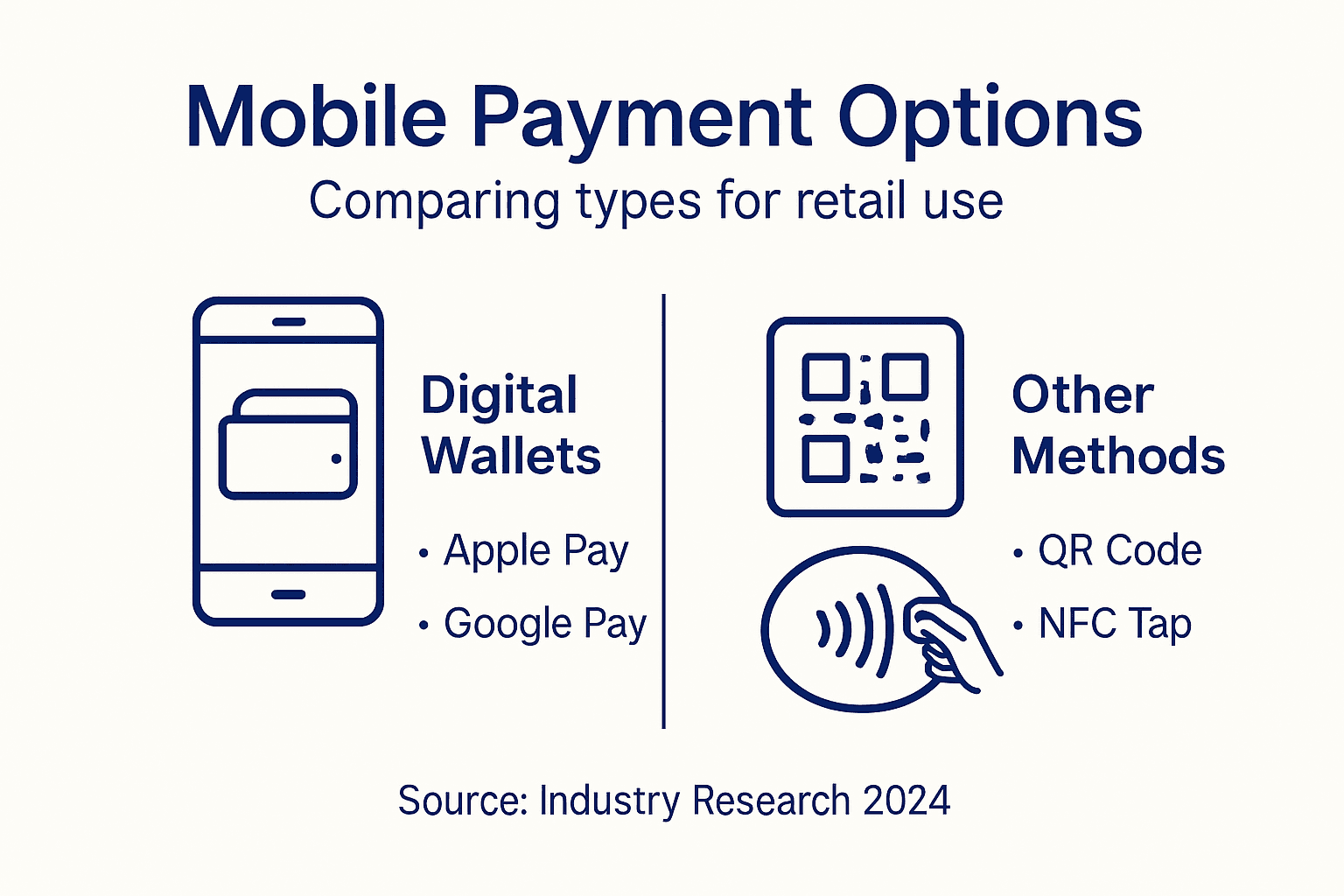
Here’s a summary comparing popular mobile payment method categories and their common uses:
| Payment Method Type | Typical Use Case | Best For |
|---|---|---|
| Digital Wallets | In-store & online purchases | Everyday retail |
| Peer-to-Peer Apps | Sending money to individuals | Quick personal transfers |
| Contactless Card | Tap-to-pay at checkout | Fast in-person payments |
| QR Code Payments | Storefront & small merchants | Flexible small payments |
| In-App Payments | Buying within specific apps | Seamless shopping apps |
Pro tip: Evaluate your mobile payment strategy by testing multiple payment methods to determine which provides the most seamless experience for your specific customer base.
How Mobile Payments Work in Retail
Mobile payment systems transform traditional retail transactions by enabling seamless digital interactions between customers and merchants. Mobile payments in retail involve instant digital authentication through sophisticated technological infrastructures that simplify purchasing processes.
The core mechanics of mobile payment transactions include:
- Device Initiation: Customer opens mobile wallet or payment app
- Connection Establishment: Smartphone communicates with point-of-sale terminal via NFC or QR code
- Authentication: Secure encrypted transaction verification
- Payment Confirmation: Instant transaction processing and receipt generation
- Data Logging: Transaction details recorded for merchant and customer records
In-store technology integration enables retailers to create frictionless customer experiences, reducing checkout times and gathering valuable transaction insights. These digital payment pathways support multiple authentication methods, including fingerprint recognition, facial scanning, and tokenized payment processes.
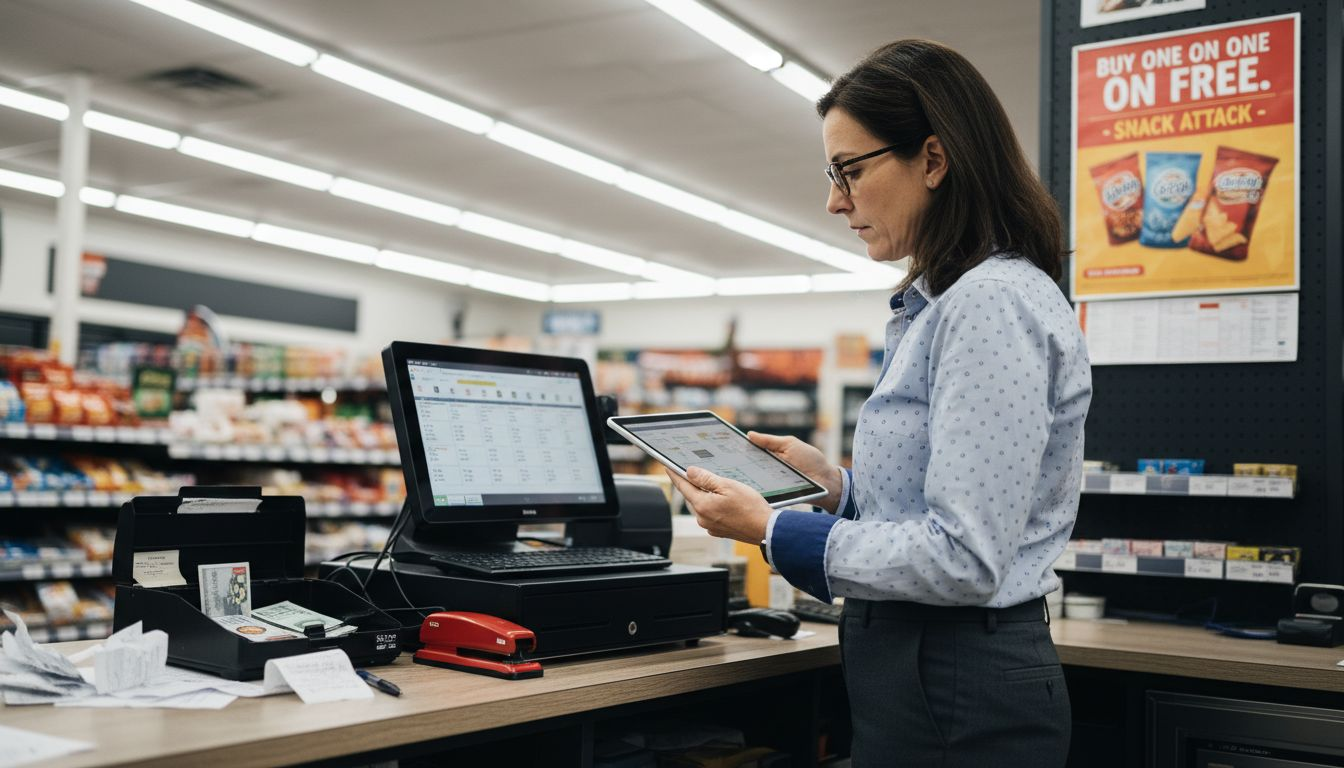
Modern mobile payment technologies prioritize security and convenience, offering consumers multiple layers of protection while delivering unprecedented transaction speed and flexibility.
Pro tip: Implement multi-factor authentication and encryption protocols to enhance mobile payment security and customer trust.
Integrating Mobile Payments with POS Systems
Mobile payment integration represents a critical technological transformation for modern retail environments. Digital payment infrastructure development enables seamless communication between smartphones and payment terminals through advanced technological frameworks.
Key components of successful mobile payment integration include:
- Hardware Compatibility: Ensuring POS systems support NFC and QR code scanning
- Software Interoperability: Developing APIs that connect payment platforms
- Security Protocols: Implementing encrypted transaction verification
- Multi-Platform Support: Accepting diverse digital payment methods
- Real-Time Processing: Enabling instant transaction authorization
Mobile payment system interoperability requires sophisticated technical standards that facilitate smooth transactions across different devices, merchants, and payment providers. These integration strategies support comprehensive digital payment ecosystems by creating flexible, secure transaction environments.
Successful integration demands collaborative approaches between technology providers, financial institutions, and retail organizations to develop robust, user-friendly payment infrastructures.
Pro tip: Conduct comprehensive compatibility testing across multiple devices and payment platforms to ensure smooth mobile payment system integration.
Risks, Security, and Compliance Standards
Mobile payment security represents a complex landscape of technological, regulatory, and operational challenges that demand comprehensive risk management strategies. Systemic risks in financial technology require sophisticated oversight mechanisms to protect both consumers and financial infrastructures.
Critical security considerations for mobile payment platforms include:
- Data Encryption: Protecting sensitive financial information
- Multi-Factor Authentication: Verifying user identities through multiple validation methods
- Tokenization: Replacing sensitive data with unique identification symbols
- Real-Time Fraud Detection: Monitoring transactions for suspicious activities
- Secure Network Protocols: Implementing robust communication standards
Payment Card Industry Standards establish comprehensive guidelines that mandate strict technical and operational requirements for securing cardholder data. These standards create a robust framework for preventing unauthorized access, ensuring transaction integrity, and maintaining customer trust.
Effective mobile payment security transcends technological solutions, requiring ongoing collaboration between financial institutions, technology providers, and regulatory bodies to anticipate and mitigate emerging digital threats.
Pro tip: Regularly conduct comprehensive security audits and update authentication protocols to stay ahead of evolving cybersecurity risks.
Key Benefits for Retail Businesses
Mobile payment technologies represent a transformative approach to retail operations, offering businesses unprecedented opportunities for growth and customer engagement. Mobile payment adoption drives significant business advantages that extend far beyond simple transaction processing.
Key benefits for retail businesses include:
- Enhanced Customer Experience: Faster, more convenient payment options
- Increased Sales Conversion: Reduced friction at checkout
- Improved Cash Flow Management: Real-time transaction tracking
- Expanded Customer Reach: Attracting tech-savvy consumer segments
- Data-Driven Insights: Comprehensive transaction analytics
- Reduced Operating Costs: Minimizing manual payment processing
Mobile payment technologies in small businesses create opportunities for sustainable growth by enabling more efficient, customer-centric retail ecosystems. These technologies support broader business objectives by providing flexible, scalable payment infrastructure.
By embracing mobile payment solutions, retailers can significantly transform their operational capabilities, creating more responsive and adaptive business models that meet modern consumer expectations.
The following table illustrates how mobile payment adoption can benefit retail businesses in key operational areas:
| Benefit Area | Mobile Payment Impact | Business Result |
|---|---|---|
| Checkout Speed | Instant digital processing | Reduced wait times |
| Customer Insights | Detailed transaction analytics | Improved marketing efforts |
| Operating Costs | Fewer manual tasks required | Lower labor expenses |
| Customer Reach | Broader access to new segments | Expanded sales potential |
Pro tip: Prioritize mobile payment solutions that offer comprehensive analytics and seamless integration with your existing point-of-sale systems.
Unlock Seamless Mobile Payment Integration for Your Retail Business
The article highlights key challenges retailers face in streamlining mobile payment technology including securing fast, flexible transactions and integrating diverse payment methods into existing POS systems. At the heart of this transformation is the need to support multiple digital wallets, contactless payments, and emerging options like crypto and BNPL while ensuring a smooth checkout experience that boosts sales and customer satisfaction.
SensePass.com directly addresses these challenges by offering an omnichannel payment gateway designed for retailers seeking to elevate their payment infrastructure. With seamless integration across major platforms like NetSuite, Shopify POS, Oracle Xstore, and Dynamics365 retailers gain the power to accept a broad spectrum of payment options including PayPal, Apple Pay, Klarna, BitPay, and Trustly. Being processor-agnostic, SensePass provides flexibility to choose from over 50 card processors enabling businesses to future-proof their payment acceptance with speed and security.
Experience fast, secure, and customer-centric retail transactions that the article emphasizes as essential for modern commerce.
Take charge of your payment ecosystem today.
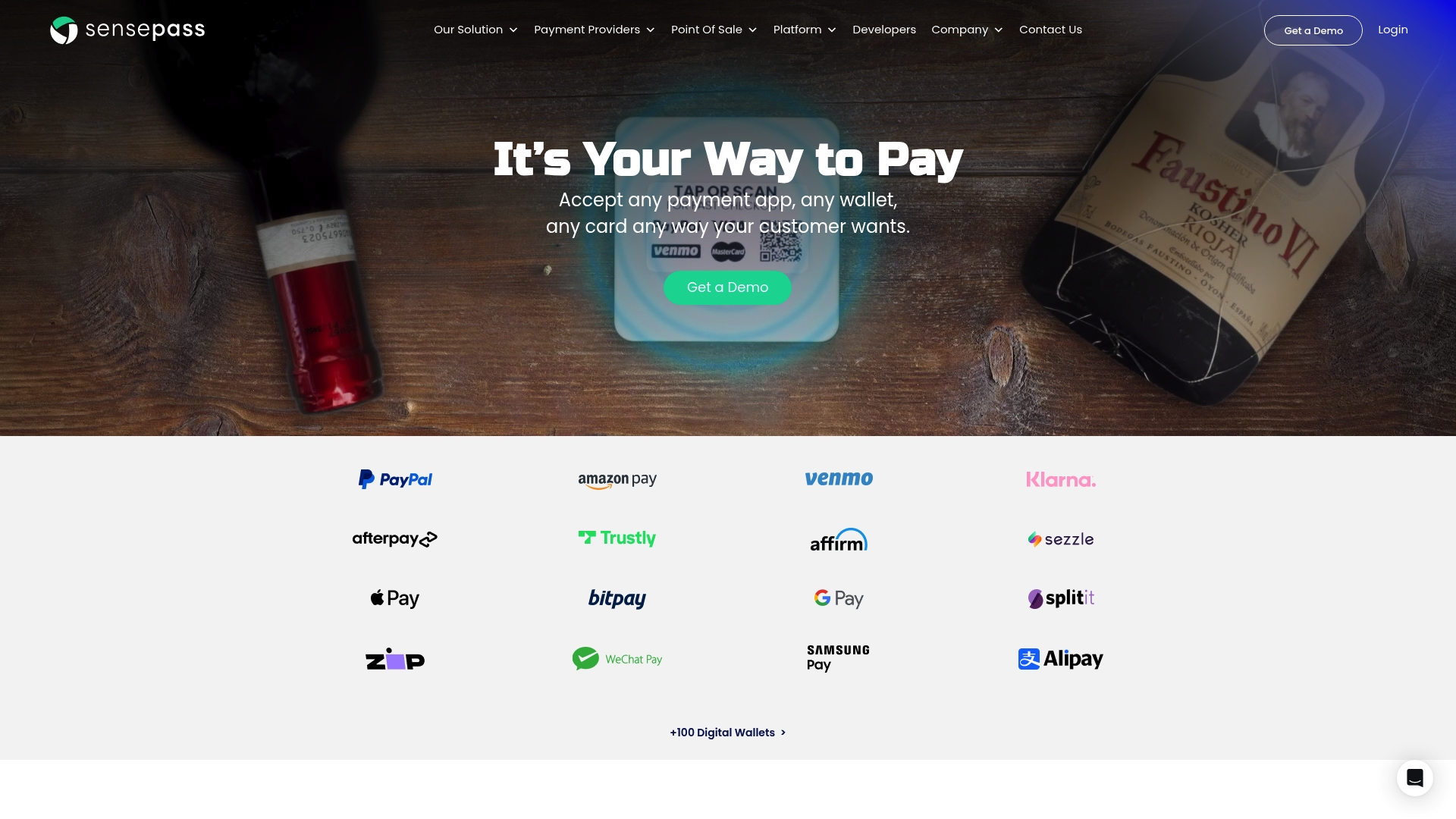
Explore how SensePass can transform your retail checkout by visiting SensePass.com. Discover tailored solutions that support every channel and payment method your customers want. Don’t wait to simplify payment complexity and boost your business efficiency. Start your journey toward seamless mobile payments now.
Frequently Asked Questions
What is mobile payment technology?
Mobile payment technology refers to a digital financial system that allows secure transactions through smartphones and other mobile devices, enabling instant and contactless financial interactions without traditional banking limitations.
What types of mobile payment methods are available?
Common mobile payment methods include digital wallets (e.g., Apple Pay, Google Pay), peer-to-peer transfer apps (e.g., Venmo, Cash App), contactless card payments, QR code payments, and in-app payments, providing diverse options for consumers and businesses.
How do mobile payments work in retail environments?
Mobile payments in retail involve a sequence where the customer initiates a payment through a mobile app, establishes a connection with the point-of-sale terminal, undergoes authentication, and completes the transaction, all within seconds and with secure verification processes.
What are the benefits of adopting mobile payment technology for retail businesses?
Adopting mobile payment technology can enhance customer experience, increase sales conversions, improve cash flow management, expand customer reach, deliver data-driven insights, and reduce operating costs, significantly transforming retail operations.
Recommended
- In-Store Mobile Payment Trends & Technologies – Omnichannel payments at the Point Of Sale | Sensepass
- How to Shorten Retail Lines: Embracing Digital Wallets and Advanced Technologies – Omnichannel payments at the Point Of Sale | Sensepass
- 7 Essential Mobile Payment Solutions List for Retailers – Omnichannel payments at the Point Of Sale | Sensepass
- 7 Essential Mobile Payment Solutions List for Retailers – Omnichannel payments at the Point Of Sale | Sensepass
- What Is Point of Sale Signage? Practical Guide for UK Businesses 2025 – PromoSigns.co.uk

 New York Office
260 Madison Ave Suite 8018 New York NY 10016

