
Payment Gateway vs Payment Processor: Key Differences for Retailers
December 23, 2025
Most American businesses face at least one major challenge when accepting payments online or in-store. With over 80 percent of shoppers expecting quick and secure checkout, understanding the difference between payment gateways and payment processors is critical for meeting customer demands. This guide breaks down these essential technologies so you can confidently choose payment solutions that keep your transactions safe, flexible, and efficient.
Table of Contents
- Payment Gateway And Payment Processor Defined
- How Payment Gateways And Processors Work Together
- Types Of Payment Methods And Integrations
- Merchant Requirements And Compliance Factors
- Comparing Costs, Flexibility, And Payment Options
- Choosing The Best Solution For Omnichannel Retail
Key Takeaways
| Point | Details |
|---|---|
| Understanding Roles | Payment gateways secure and transmit payment data, while payment processors move funds between banks. |
| Essential Integration | Choose a payment solution that supports diverse payment methods and integrates seamlessly with existing systems. |
| Compliance Matters | Ensure PCI compliance and robust security features to protect customer financial data. |
| Cost Awareness | Regularly analyze transaction costs to identify the most efficient payment methods and processors for your business. |
Payment Gateway and Payment Processor Defined
In the world of digital transactions, two critical technologies work behind the scenes to enable smooth payment experiences: payment gateways and payment processors. Though often confused, these systems play distinctly different roles in handling financial transactions for businesses.
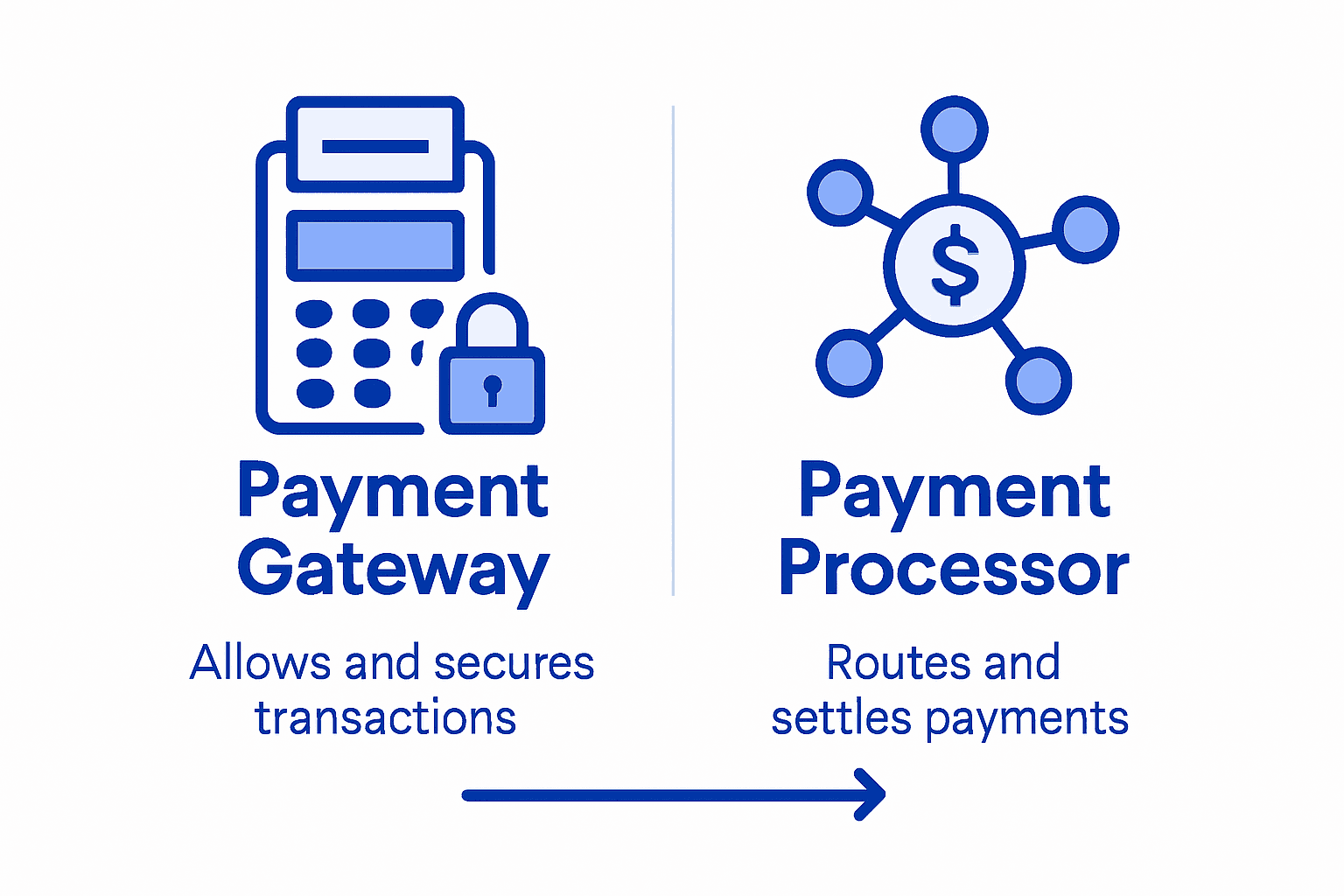
A payment gateway functions as a digital security checkpoint that securely collects and encrypts customer payment information at the point of sale. Think of it like a virtual card reader that captures transaction details, verifies the payment method’s authenticity, and ensures all sensitive data remains protected through encryption. Payment gateways are responsible for maintaining PCI compliance standards and creating a secure bridge between merchants and financial networks.
By contrast, a payment processor handles the actual movement of funds between bank accounts. It verifies transaction details and determines whether the buyer has sufficient funds to complete a purchase. The processor communicates with the customer’s bank, merchant’s bank, and card networks to authorize and settle transactions. Essentially, payment processors act as the financial intermediary that transfers money from the customer’s account to the merchant’s account.
SensePass supports both payment gateway and processor functionalities across multiple platforms and payment methods, providing retailers with a comprehensive solution for managing digital transactions. By integrating seamlessly with platforms like NetSuite, Shopify POS, and Dynamics 365, SensePass offers maximum flexibility for businesses seeking robust payment infrastructure.
Here’s a side-by-side overview of payment gateways and payment processors to clarify their distinct roles:
| Aspect | Payment Gateway | Payment Processor |
|---|---|---|
| Primary Function | Secures and transmits payment data | Moves funds between banks |
| Main Responsibility | Encrypts customer information | Authorizes, settles transactions |
| Interaction Point | Customer checkout or POS | Bank networks, card networks |
| Business Impact | Reduces fraud risk, ensures compliance | Enables swift fund transfer |
| Compliance Focus | PCI DSS, data protection | Transaction accuracy, settlement |
| Example Usage | Online store checkout encryption | Credit card payment approval |
Pro Tip: Always verify that your payment gateway and processor are PCI compliant and offer robust security features to protect your business and customer financial data.
How Payment Gateways and Processors Work Together
Payment gateways and processors are critical technological partners that collaborate seamlessly to enable secure and efficient financial transactions for businesses. These distinct components work together to transfer card information and complete payment processing, creating a comprehensive transaction ecosystem.
The process begins when a customer initiates a purchase, typically by entering payment details on an online platform or swiping a card at a point-of-sale terminal. The payment gateway immediately encrypts this sensitive information and securely transmits the transaction data to the payment processor. This initial handoff ensures that financial details remain protected throughout the entire transaction cycle.

Once the payment processor receives the encrypted data, it communicates with multiple financial networks to validate the transaction. This involves checking the customer’s account balance, verifying card authenticity, and obtaining authorization from the issuing bank. The processor then routes the transaction through card networks like Visa or Mastercard, ultimately transferring funds from the customer’s account to the merchant’s account. This intricate dance of digital communication happens in mere seconds, creating a seamless payment experience.
SensePass provides comprehensive payment infrastructure that supports this complex interaction between gateways and processors. By integrating with platforms like NetSuite, Shopify POS, and Dynamics 365, SensePass offers businesses a robust solution that handles these technical nuances transparently, supporting digital wallets, credit cards, and alternative payment methods across multiple channels.
Pro Tip: Choose a payment solution that offers transparent transaction routing and provides real-time reporting to help you understand and optimize your payment processing efficiency.
Types of Payment Methods and Integrations
Modern retailers require flexible payment solutions that support a diverse range of transaction types and technological platforms. Payment processors can be strategically categorized into front-end and back-end systems, each serving unique functions in the financial transaction ecosystem.
Front-end processors are responsible for maintaining critical connections with card networks and settlement services, acting as the primary interface between merchants, banks, and payment infrastructure. These processors handle real-time authorization requests, verify transaction details, and ensure seamless communication across complex financial networks. Back-end processors, by contrast, focus on the critical backend settlement process, transferring funds between issuing and merchant banks and completing the financial transaction cycle.
SensePass supports an extensive array of payment methods to meet diverse business needs. Our platform offers comprehensive integration with digital wallets like Apple Pay, Google Pay, and PayPal, along with Buy Now Pay Later (BNPL) options such as Klarna and Afterpay. We also facilitate cryptocurrency transactions through BitPay and Coinbase, financing options via Affirm, and bank transfer methods like Trustly. This versatility allows businesses to accommodate customer preferences across multiple payment channels, from traditional credit cards to emerging digital payment technologies.
Our platform integrates seamlessly with major retail management systems including NetSuite, Shopify POS, Oracle Xstore, Dynamics 365, and BigCommerce. This flexibility enables businesses to implement sophisticated payment strategies without disrupting existing technological infrastructures.
Summary of key payment integration options and their usual business benefits:
| Integration Type | Typical Use Case | Business Benefit |
|---|---|---|
| Digital Wallets | Mobile, online checkout | Faster, convenient payments |
| BNPL Services | High-ticket retail, e-commerce | Increases conversion rates |
| Cryptocurrencies | Global or tech-forward stores | Access to new customer base |
| Bank Transfers | Subscription services | Lower processing costs |
| Retail Systems Integration | Multichannel retail management | Unified customer experience |
Pro Tip: Evaluate payment integration solutions based on their ability to support multiple payment methods and compatibility with your existing point-of-sale systems to maximize transaction flexibility and customer convenience.
Merchant Requirements and Compliance Factors
Navigating payment processing compliance requires a comprehensive understanding of complex regulatory standards that protect both businesses and consumers. While compliance with Payment Card Industry Data Security Standard (PCI DSS) is not federally mandated, some state laws directly reference or create equivalent provisions, creating a nuanced regulatory landscape for merchants.
Payment Card Industry Data Security Standard (PCI DSS) represents the foundational framework for secure payment transactions. This comprehensive standard mandates rigorous security protocols for businesses handling credit card information, including encryption requirements, network protection, vulnerability management, and strict access control mechanisms. Merchants must implement multi-layered security strategies that protect sensitive financial data from potential breaches, with specific requirements varying based on transaction volume and payment processing methods.
SensePass supports merchants in achieving robust compliance through advanced security features. Our platform provides end-to-end encryption, tokenization of payment data, and sophisticated fraud detection mechanisms that align with PCI DSS guidelines. We enable businesses to manage payment transactions across multiple channels while maintaining stringent security standards, supporting digital wallets, credit cards, and emerging payment technologies with comprehensive protection protocols.
Our platform integrates seamlessly with major retail management systems like NetSuite, Shopify POS, Oracle Xstore, Dynamics 365, and BigCommerce, ensuring that compliance requirements are consistently met across different technological environments. By offering processor-agnostic solutions and supporting over 50 card processors, SensePass provides merchants maximum flexibility in developing secure, compliant payment strategies.
Pro Tip: Conduct regular security audits and stay informed about evolving compliance standards to proactively protect your business and customer financial information.
Comparing Costs, Flexibility, and Payment Options
Understanding the financial dynamics of payment technologies is critical for businesses seeking cost-effective transaction solutions. Payment processors typically charge fees calculated as a portion of each transaction, with merchant discount rates generally ranging from 1% to 3% of the purchase, creating a nuanced pricing landscape for retailers.
Payment Gateway Pricing Models vary significantly across providers. Some gateways charge monthly fees, while others operate on a per-transaction basis. Businesses can choose between integrated payment gateways built into their e-commerce platforms or third-party gateways that redirect customers during checkout, each with distinct cost implications and user experience considerations.
SensePass offers exceptional flexibility by supporting multiple payment methods and processors. Our platform enables businesses to accept digital wallets like Apple Pay and Google Pay, Buy Now Pay Later options such as Klarna and Afterpay, cryptocurrency payments through BitPay, financing alternatives via Affirm, and traditional bank transfer methods. This comprehensive approach allows merchants to optimize transaction costs while providing customers with diverse payment choices across platforms like NetSuite, Shopify POS, Oracle Xstore, Dynamics 365, and BigCommerce.
Our processor-agnostic model supports over 50 card processors, giving merchants unprecedented control over their payment infrastructure. By offering transparent pricing and supporting multiple payment channels, SensePass helps businesses reduce processing expenses while maintaining a seamless, secure transaction experience.
Pro Tip: Regularly analyze your transaction data to identify the most cost-effective payment methods and processors for your specific business model.
Choosing the Best Solution for Omnichannel Retail
Online stores and brick-and-mortar retailers have distinct payment infrastructure requirements, making the selection of the right payment solution crucial for seamless transaction management. While traditional physical stores might only need a payment processor, digital and omnichannel businesses require more sophisticated, integrated payment technologies.
Omnichannel Payment Considerations extend beyond simple transaction processing. Retailers need solutions that can smoothly handle transactions across multiple platforms – from physical point-of-sale systems to online marketplaces, mobile applications, and call center environments. This demands a flexible payment infrastructure that can adapt to diverse customer interaction channels while maintaining consistent security and user experience.
SensePass addresses these complex requirements by offering a comprehensive payment solution that supports an extensive range of payment methods. Our platform integrates digital wallets like Apple Pay and Google Pay, Buy Now Pay Later options such as Klarna and Afterpay, cryptocurrency payments via BitPay, financing alternatives through Affirm, and traditional bank transfer methods. We provide seamless integration with major retail management systems including NetSuite, Shopify POS, Oracle Xstore, Dynamics 365, and BigCommerce, enabling businesses to create a truly unified payment experience.
Our processor-agnostic approach supports over 50 card processors, giving retailers unprecedented flexibility in designing their payment infrastructure. By offering transparent pricing, robust security features, and support for multiple payment channels, SensePass helps businesses create a cohesive, efficient transaction ecosystem that meets the evolving demands of modern retail.
Pro Tip: Evaluate payment solutions based on their ability to provide a consistent, secure transaction experience across all your retail channels.
Unlock Seamless Omnichannel Payments with SensePass
The article highlights the critical challenge retailers face in distinguishing between payment gateways and processors while managing complex transaction flows securely and efficiently across channels. If you are striving to simplify this intricate payment ecosystem and want to safeguard every step from data encryption to fund settlement, SensePass offers a powerful solution designed specifically for your needs. Our platform addresses key pain points such as reducing fraud risk, ensuring PCI compliance, and handling a broad range of payment methods seamlessly.
SensePass integrates effortlessly with major retail platforms and POS systems including NetSuite, SuiteCommerce, Oracle Xstore, Aptos, Shopify POS, BigCommerce, Storis, NCR, Dynamics365, and more. We support an extensive suite of payment methods like digital wallets (Apple Pay, Google Pay, PayPal, Venmo, Amazon Pay), Buy Now Pay Later providers (Klarna, Afterpay, Sezzle), financing options (WeGetFinancing, Affirm), crypto payments (BitPay, Coinbase), and bank pay solutions (Trustly, LinkMoney). Plus, our processor-agnostic approach gives you the freedom to choose from over 50 card processors ensuring maximum flexibility across your omnichannel sales.
Elevate your retail payment strategy and bridge the gap between gateway and processor with technology built for today’s customer preferences and business demands. Discover how SensePass can empower your business with a secure, versatile, and developer-friendly payment ecosystem.
Experience the future of retail payments today by visiting SensePass to learn more about our solutions.
Ready to transform your payment infrastructure and enhance operational efficiency across all channels Visit SensePass now to get started and take control of your transaction experience.
Frequently Asked Questions
What is the main difference between a payment gateway and a payment processor?
A payment gateway secures and transmits payment data, while a payment processor moves funds between banks and authorizes transactions.
How do payment gateways and processors work together in a transaction?
Payment gateways encrypt customer payment information and send it to payment processors, which verify transaction details and handle fund transfers between banks.
What compliance standards should I be aware of when using payment gateways and processors?
Merchants must adhere to PCI DSS compliance standards to ensure secure handling of credit card information and protect sensitive financial data from breaches.
What types of payment methods can I integrate with my payment gateway and processor?
You can integrate various payment methods including digital wallets like Apple Pay and Google Pay, Buy Now Pay Later options, cryptocurrencies, and traditional bank transfers.
Recommended
- Payment Gateway vs Payment Processor | SensePass Guide
- Payment Gateway vs Processor: Complete Breakdown – Omnichannel payments at the Point Of Sale | Sensepass
- Payment Gateway Best Practices: Complete Guide – Omnichannel payments at the Point Of Sale | Sensepass
- Role of Payment Gateways: Complete Retail Guide – Omnichannel payments at the Point Of Sale | Sensepass
- Why Local Print Shops: Complete Guide for Businesses – Custom T-Shirts and Printed Merch in Utah | Pulse Merch

 New York Office
260 Madison Ave Suite 8018 New York NY 10016

