
Payment Integration: Complete Guide for Retailers
October 23, 2025
Did you know that global cybercrime costs reached $8 trillion in 2024, making secure payment systems more crucial than ever for retailers? Digital payments are no longer just a convenience, they have become central to how customers shop both online and in stores. Understanding payment integration gives your business the power to streamline checkouts, protect sensitive data, and personalize shopping for every customer.
Table of Contents
- Defining Payment Integration In Retail
- Types Of Payment Integration Methods
- How Omnichannel Payment Solutions Work
- Supported Platforms And Payment Methods Explained
- Costs, Risks, And Compliance Factors
- Common Mistakes And Best Practices
Key Takeaways
| Point | Details |
|---|---|
| Payment Integration Efficiency | Payment integration automates connections between various systems, reducing manual data entry and improving operational accuracy. |
| Omnichannel Solutions | These solutions synchronize transactions across different platforms, enhancing the customer checkout experience and supporting global payment options. |
| Security and Compliance | Robust security measures and compliance with PCI DSS are crucial to protect sensitive data and mitigate risks associated with payment transactions. |
| Common Pitfalls in Implementation | Retailers must avoid inadequate security, poor system compatibility, and overlooking user experience to ensure successful payment system integration. |
Defining Payment Integration in Retail
Payment integration transforms traditional retail transactions by creating seamless connections between payment processing systems and core business infrastructure. According to PayPal research, these integrated systems generate a low-friction checkout experience that simultaneously updates critical merchant systems, dramatically reducing manual data entry and operational complexity.
At its core, payment integration enables automated interactions between point-of-sale (POS) systems, payment processors, accounting software, and inventory management platforms. As research from Airwallex indicates, this automation streamlines critical business processes like payment processing, invoicing, and financial reconciliation, significantly reducing manual effort and improving overall operational accuracy.

Key characteristics of effective payment integration include:
- Real-time transaction data synchronization
- Automatic inventory updates
- Seamless financial reporting
- Reduced human error in transaction processing
- Enhanced customer checkout experience
For retailers seeking comprehensive payment solutions, understanding these integration fundamentals becomes crucial. Complete Retail Payment Integration Tutorial for 2025 offers deeper insights into implementing robust omnichannel payment strategies that can transform your retail operations.
Types of Payment Integration Methods
Payment integration methods in retail encompass a diverse range of technologies designed to streamline transaction processing and business operations. According to research from Convergine, modern retail systems like Square, Toast, and Lightspeed now combine multiple business functions, enabling retailers to process transactions while simultaneously managing inventory, staff scheduling, and customer loyalty programs.
These integration methods typically fall into three primary categories: point-of-sale (POS) integrations, online payment integrations, and omnichannel payment solutions. Each approach offers unique capabilities for connecting payment systems with broader business infrastructure. For instance, as research from iCoderz Solutions highlights, platforms like Square excel at creating seamless connections between online and in-person payment experiences, particularly for businesses with multiple sales channels.
Key types of payment integration methods include:
Here’s a comparison of the main retail payment integration methods:
| Integration Method | Core Features | Ideal Use Case |
|---|---|---|
| Direct POS Integration | Real-time sync Inventory & accounting updates |
Brick-and-mortar stores |
| Cloud-Based Solutions | Multi-platform access Real-time tracking |
Retailers with online & physical stores |
| API-Driven Integrations | Custom connectivity Enhanced flexibility |
Businesses with unique software needs |
| Mobile Payment | Smartphone/tablet support Quick checkouts |
Stores offering contactless payments |
| Unified Commerce | Omnichannel management Centralized reporting |
Retailers with multiple sales channels |
- Direct POS Integration: Connecting payment terminals directly with inventory and accounting systems
- Cloud-Based Payment Solutions: Enabling real-time transaction tracking across multiple platforms
- API-Driven Integrations: Allowing custom connections between different business software
- Mobile Payment Integrations: Supporting transactions through smartphone and tablet platforms
- Unified Commerce Platforms: Providing comprehensive payment management across all sales channels
Understanding Integrated Payment Systems Guide provides deeper insights into selecting the right integration strategy for your specific retail environment.

How Omnichannel Payment Solutions Work
Omnichannel payment solutions represent a sophisticated approach to transaction processing that seamlessly connects multiple sales channels and payment methods. According to research from Moldstud, these integrations consolidate various transaction methods across platforms, creating a unified checkout experience that allows customers to use their preferred payment options regardless of where they shop.
At the core of omnichannel payment systems is the ability to synchronize transaction data across different touchpoints. As Airwallex research highlights, these integrated systems support global payments, enabling businesses to accept multiple currencies and local payment methods. This capability allows for dynamic pricing updates based on customer location, ultimately helping retailers reach new audiences and build trust through localized checkout experiences.
Key operational features of omnichannel payment solutions include:
- Real-time Transaction Synchronization: Instant data sharing across online and offline platforms
- Unified Customer Profiles: Tracking customer interactions and preferences across all sales channels
- Flexible Payment Method Support: Accepting diverse payment types including digital wallets, credit cards, and local payment methods
- Global Currency Handling: Automatic currency conversion and localized pricing
- Secure Transaction Routing: Intelligent payment processing across multiple payment gateways
Mastering the Omnichannel Payment Workflow Guide offers retailers comprehensive insights into implementing these advanced payment integration strategies.
Supported Platforms and Payment Methods Explained
Digital wallets have revolutionized the way businesses process transactions across multiple platforms. According to Wikipedia, a digital wallet is an electronic service that enables parties to conduct electronic transactions seamlessly, whether online or at physical point-of-sale locations. This flexibility allows retailers to offer customers multiple payment options that suit their preferences and technological comfort levels.
As research from Neklo highlights, modern payment integration solutions like Braintree demonstrate the complexity of contemporary payment ecosystems. These platforms support a diverse range of payment methods, including credit and debit cards, digital wallets like PayPal and Venmo, and mobile in-app payment systems. The key is providing a comprehensive suite of options that cater to different customer segments and technological capabilities.
Supported payment methods typically include:
- Digital Wallets: Apple Pay, Google Pay, Samsung Pay
- Credit and Debit Cards: Visa, Mastercard, American Express
- Mobile Payment Solutions: PayPal, Venmo, Cash App
- Buy Now Pay Later (BNPL): Klarna, Affirm, Afterpay
- Cryptocurrency Payments: Bitcoin, Ethereum
- Bank Transfers: Direct bank connections, ACH payments
Payment Methods in Retail Guide offers retailers an in-depth exploration of emerging payment technologies and integration strategies.
Costs, Risks, and Compliance Factors
Payment integration introduces complex financial and security considerations that retailers must carefully navigate. According to PayPal research, integrated payment solutions play a critical role in securing sensitive data by establishing direct, protected transfer channels between payment gateways, point-of-sale systems, and payment processors, significantly reducing opportunities for data interception.
As research from Airwallex reveals, the cybersecurity landscape is increasingly challenging, with global cybercrime costs reaching $8 trillion in 2024. Advanced integrated payment systems address these risks by implementing sophisticated security measures that protect both merchants and customers. These systems go beyond basic transaction processing, providing comprehensive risk management strategies that help businesses maintain regulatory compliance and protect financial information.
Key compliance and risk management factors include:
- Data Security Protocols: Implementing end-to-end encryption
- PCI DSS Compliance: Meeting Payment Card Industry data security standards
- Fraud Detection Mechanisms: Real-time transaction monitoring
- Transaction Cost Management: Minimizing processing fees
- Regulatory Adherence: Maintaining compliance across different jurisdictions
- Customer Data Protection: Securing personal and financial information
Payment Methods in Retail Guide offers an in-depth exploration of navigating these critical payment integration challenges.
Common Mistakes and Best Practices
Payment integration requires strategic planning and careful execution to avoid common pitfalls that can disrupt business operations. According to research from Airwallex, automated payment systems can significantly improve operational efficiency by reducing manual data entry and streamlining critical business processes, but only when implemented correctly.
PayPal research highlights that creating a low-friction checkout experience demands more than just technical implementation. Successful integration involves understanding the intricate balance between customer experience, system compatibility, and operational workflows. Retailers must be proactive in identifying potential integration challenges and developing comprehensive strategies to mitigate risks before they impact business performance.
Key best practices and common mistakes to avoid include:
- Inadequate Security Protocols: Neglecting robust encryption and fraud prevention
- Poor Platform Compatibility: Selecting integration solutions incompatible with existing systems
- Overlooking User Experience: Complicated checkout processes that frustrate customers
- Insufficient Training: Not properly educating staff on new payment systems
- Ignoring Scalability: Choosing solutions that cannot grow with business needs
- Manual Reconciliation: Failing to automate financial tracking and reporting
7 Types of Payment Gateways Guide provides retailers with deeper insights into selecting the right payment integration strategies.
Simplify Retail Payment Integration with SensePass
The complexity of integrating diverse payment methods while ensuring seamless omni-channel customer experiences can overwhelm many retailers. As highlighted in the “Payment Integration: Complete Guide for Retailers,” common challenges include synchronizing transaction data in real time, supporting multiple payment options, and enhancing operational efficiency without compromising security or convenience. These pain points demand not just powerful technology but flexible connectivity with popular retail platforms and a broad suite of payment methods.
SensePass answers this call by providing a processor-agnostic orchestration layer that integrates effortlessly with top POS and eCommerce systems such as NetSuite, SuiteCommerce, Oracle Xstore, Aptos, Shopify POS, BigCommerce, Storis, NCR, and Dynamics365. It supports an extensive range of payment options from widely used digital wallets like PayPal, Apple Pay, and Google Pay, to BNPL services including Klarna and Afterpay, financing options like Affirm, cryptocurrency payments via BitPay and Coinbase, and pay-by-bank methods such as Trustly. This diversity enhances your customer’s checkout choices while streamlining backend reconciliation and reducing processing costs.
Drive your retail business forward with a truly omnichannel approach that improves sales conversion and simplifies payment management. Discover how SensePass can modernize your payment integration strategy by visiting SensePass. Take the next step to embrace seamless retail payment integration today.
Increase your knowledge with helpful resources like the Complete Retail Payment Integration Tutorial for 2025 and deepen your understanding by exploring Payment Methods in Retail Guide.
Ready to transform your checkout experience with flexibility and speed
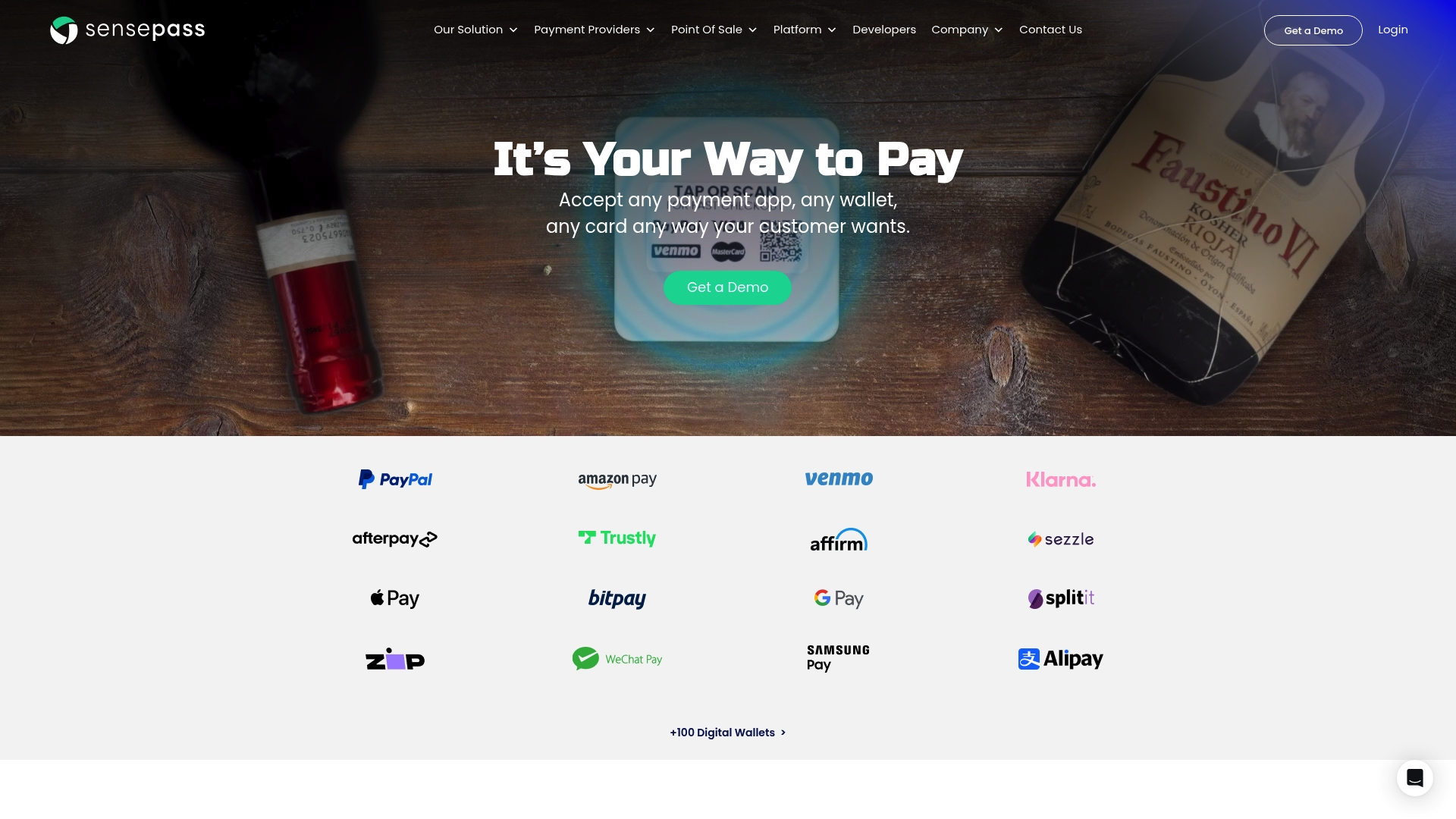
Explore SensePass now at https://sensepass.com and unlock the full potential of your retail payments.
Frequently Asked Questions
What is payment integration in retail?
Payment integration in retail refers to the seamless connection between payment processing systems and a retailer’s business infrastructure, enabling automated interactions among point-of-sale systems, payment processors, accounting software, and inventory management platforms.
What are the key characteristics of effective payment integration?
Key characteristics of effective payment integration include real-time transaction data synchronization, automatic inventory updates, seamless financial reporting, reduced human error in transaction processing, and an enhanced customer checkout experience.
What types of payment integration methods are available for retailers?
Retailers can utilize various payment integration methods, which include Direct POS Integration, Cloud-Based Solutions, API-Driven Integrations, Mobile Payment, and Unified Commerce Platforms, each offering unique capabilities tailored to different business needs.
What are the compliance factors to consider with payment integration?
Key compliance factors for payment integration include ensuring data security protocols, adhering to PCI DSS standards, implementing fraud detection mechanisms, managing transaction costs effectively, maintaining regulatory adherence, and securing customer data to protect personal and financial information.
Recommended

 New York Office
260 Madison Ave Suite 8018 New York NY 10016

