
Master Payment Processing Best Practices for Your Business
October 6, 2025
Every business wants smoother payments and happier customers. Yet, nearly one in ten online purchases fails due to payment issues, costing sellers both money and loyalty. That sounds like a tech problem, but the real obstacle is usually hidden in plain sight—outdated systems and overlooked customer preferences could be quietly draining your profits.
Table of Contents
- Step 1: Assess Your Current Payment Infrastructure
- Step 2: Identify Customer Payment Preferences
- Step 3: Choose Secure Payment Processing Solutions
- Step 4: Implement Omnichannel Payment Strategies
- Step 5: Monitor and Optimize Payment Performance
- Step 6: Regularly Review Security and Compliance
Quick Summary
| Key Point | Explanation |
|---|---|
| 1. Audit Your Payment Systems | Evaluate all current payment channels for performance metrics and gaps that impact financial results. |
| 2. Understand Customer Preferences | Analyze preferred payment methods by demographics to improve the purchasing experience. |
| 3. Prioritize Payment Security | Choose solutions that comply with PCI DSS and have strong encryption methods to protect transactions. |
| 4. Implement Omnichannel Strategies | Ensure payment systems work seamlessly across all platforms for a consistent customer experience. |
| 5. Regularly Monitor Payment Performance | Track transaction metrics and optimize payment processes to enhance efficiency and conversion rates. |
Step 1: Assess Your Current Payment Infrastructure
Successfully optimizing your payment processing begins with a comprehensive evaluation of your existing payment infrastructure. This critical first step involves thoroughly examining your current payment systems, identifying potential bottlenecks, and understanding the gaps that might be hindering your business’s financial performance.
Start by conducting a detailed audit of your existing payment channels. Map out every payment touchpoint in your business including point of sale systems, online checkout processes, mobile payment interfaces, and any recurring billing mechanisms. Collect comprehensive data about transaction volumes, current processing fees, average transaction times, and customer completion rates. These metrics provide a foundational understanding of your payment ecosystem’s current performance.
Next, engage with your team members who directly interact with payment systems. Front line staff like cashiers, customer service representatives, and sales personnel can offer invaluable insights into daily transaction challenges. Their firsthand experiences might reveal friction points that are not immediately apparent through numerical data. Learn more about integrated payment system optimization to gain deeper strategic perspectives.
Critical verification criteria for this assessment include:
- Accurate documentation of all current payment methods
- Detailed transaction volume and performance metrics
- Identification of system integration challenges
- Comparison of current processing fees against industry benchmarks
As you compile this information, pay special attention to areas where customer experience might be compromised. Slow transaction processing, limited payment method options, or complex checkout procedures can significantly impact conversion rates. Your goal is to create a comprehensive snapshot of your current payment infrastructure that will serve as a roadmap for strategic improvements in subsequent steps of your payment processing optimization journey.
Below is a checklist summarizing the key criteria to verify during your assessment of the current payment infrastructure, helping ensure a thorough and actionable review.
| Verification Criteria | Description |
|---|---|
| Documentation of Current Payment Methods | Ensure all existing payment options are accurately recorded |
| Transaction Volume and Performance Metrics | Collect data on transaction numbers, times, and completion rates |
| System Integration Challenges | Identify any connectivity or compatibility issues among payment platforms |
| Processing Fees vs. Industry Benchmarks | Compare your costs to standard industry rates for context |
| Customer Experience Pain Points | Document areas with slow processing, limited options, or friction |
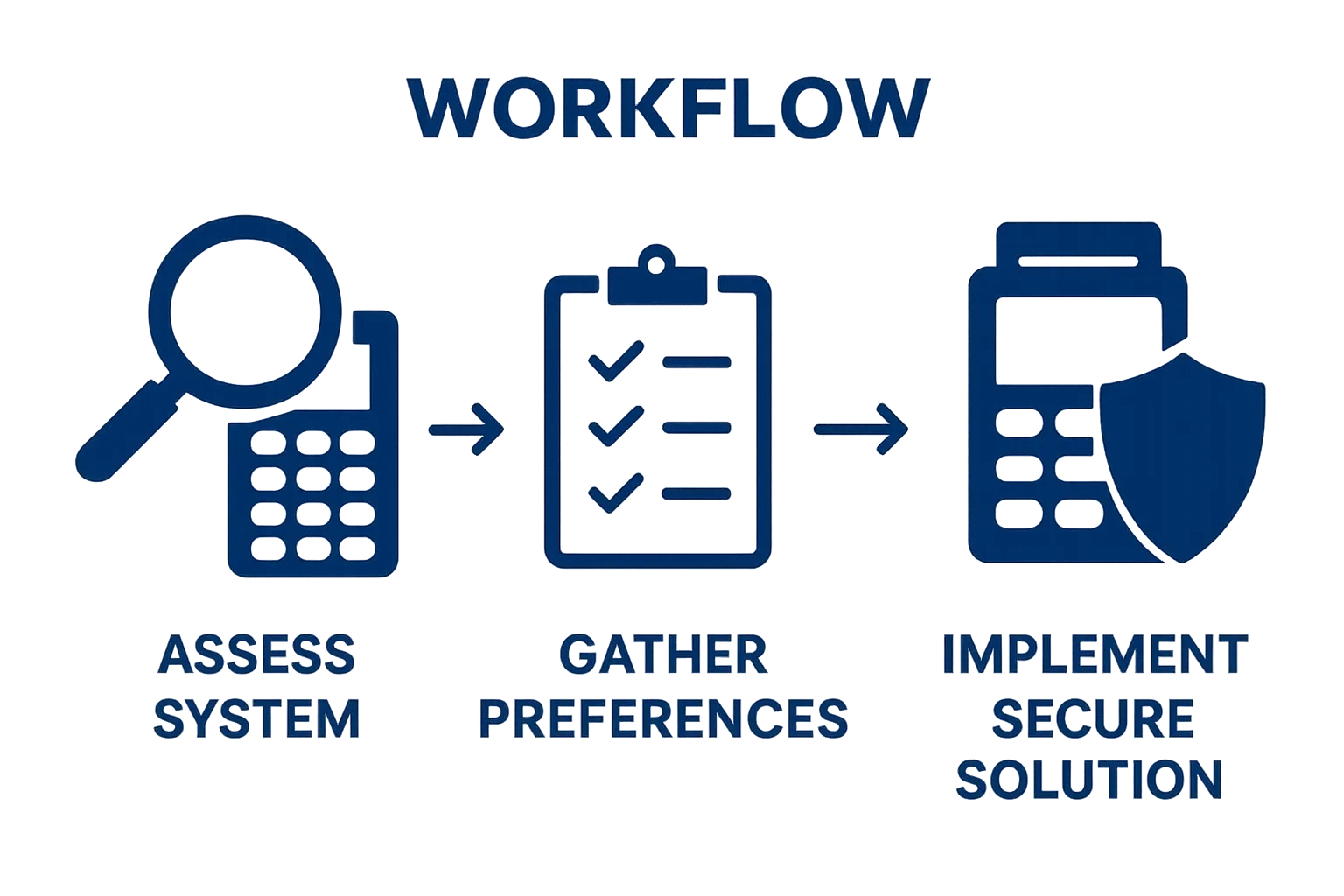
By methodically assessing your payment systems, you’re laying the groundwork for a more efficient, customer friendly, and cost effective payment processing strategy.
Step 2: Identify Customer Payment Preferences
Understanding your customers’ payment preferences is a critical step in creating a seamless transaction experience that can directly impact your business’s sales and customer satisfaction. This step moves beyond generic assumptions and requires a strategic approach to deeply comprehend how your specific customer base wants to complete their purchases.
Begin by segmenting your customer demographic and analyzing their preferred payment methods. Different age groups and customer segments exhibit distinct payment behaviors. Younger consumers often prefer digital wallets and contactless payments, while older demographics might still favor traditional credit card transactions. Explore insights into payment methods in retail to gain deeper understanding of these nuanced preferences.
Collect this information through multiple channels. Implement short customer surveys at point of sale, include quick feedback mechanisms in digital receipts, and analyze transaction data from your existing payment systems. Pay close attention to emerging payment trends like digital wallets, buy now pay later options, and cryptocurrency. These are not just passing fads but represent significant shifts in consumer financial behavior.
Key verification criteria for customer payment preference identification include:
- Comprehensive documentation of current payment method usage
- Percentage breakdown of different payment method adoption
- Identification of generational or demographic payment trends
- Comparison of payment preferences across different product categories
Remember that payment preference research is not a one time activity but an ongoing process. Consumer financial behaviors evolve rapidly with technological advancements and economic conditions. Regularly revisiting and updating your understanding ensures that your payment infrastructure remains aligned with customer expectations, ultimately reducing friction in the purchasing journey and potentially increasing conversion rates.
By systematically mapping out your customers’ payment preferences, you’re building a customer centric approach that can differentiate your business in an increasingly competitive marketplace.

Step 3: Choose Secure Payment Processing Solutions
Selecting the right payment processing solution is a pivotal decision that directly impacts your business’s financial security, customer experience, and operational efficiency. This step transforms the insights gathered from your previous infrastructure and customer preference assessments into a strategic technological investment.
Payment security should be your paramount consideration. Look for solutions that offer robust encryption, tokenization, and compliance with Payment Card Industry Data Security Standard (PCI DSS) requirements. Explore the comprehensive guide to understanding payment gateways to gain deeper insights into selecting the right technological infrastructure.
Evaluate potential payment processing solutions through a multifaceted lens. Beyond basic transaction capabilities, consider integration flexibility, real time reporting features, multi channel support, and scalability. Your chosen solution should seamlessly adapt to your current business model while providing room for future growth.
This table provides a concise comparison of key features to evaluate when selecting a payment processing solution, organizing the main criteria mentioned in the article for easy reference.
| Feature | What to Look For |
|---|---|
| Security Certifications & Compliance | PCI DSS adherence, encryption, tokenization |
| Transaction Fees | Transparent, competitive, and easy-to-understand structures |
| Integration Assistance | Robust tech support and compatibility with business systems |
| Platform Reliability | Proven uptime and minimal service interruptions |
| Multi-Channel Support | Ability to process payments across in-store, web, and mobile |
| Scalability | Supports future business growth and new payment methods |
| Assess the platform’s ability to support diverse payment methods including credit cards, digital wallets, mobile payments, and emerging technologies like cryptocurrency and buy now pay later options. |
Critical verification criteria for payment solution selection include:
- Comprehensive security certifications and compliance standards
- Transparent and competitive transaction fee structures
- Robust customer support and technical integration assistance
- Proven track record of reliability and minimal downtime
- Compatibility with existing business software and point of sale systems
Pay special attention to the total cost of ownership. While upfront pricing is important, consider long term expenses including integration costs, potential chargeback fees, and ongoing maintenance requirements. Some payment processors offer tiered pricing models that can become unexpectedly complex, so request detailed breakdowns and understand exactly what you will be paying.
By methodically evaluating payment processing solutions through a lens of security, functionality, and strategic alignment, you create a robust financial infrastructure that supports seamless customer transactions and protects your business’s financial ecosystem.
Step 4: Implement Omnichannel Payment Strategies
Implementing a robust omnichannel payment strategy transforms your business from a traditional transaction model to a seamless customer experience ecosystem. This step focuses on creating a unified payment approach that allows customers to interact and purchase through multiple channels while maintaining a consistent, frictionless experience.
The core of omnichannel strategy is technological integration and consistency. Your payment systems must communicate flawlessly across in store point of sale, mobile applications, online platforms, and emerging digital touchpoints. Learn more about navigating omnichannel retail payment challenges to understand the comprehensive approach required for successful implementation.
Begin by mapping your customer journey across all potential interaction points. This means understanding how a customer might start a purchase on a mobile app, continue research on a desktop website, and potentially complete the transaction in a physical store. Your payment infrastructure must support seamless transitions between these channels, maintaining cart information, preserving payment preferences, and ensuring smooth authentication processes.
Critical verification criteria for omnichannel payment strategy implementation include:
- Consistent payment method acceptance across all platforms
- Real time synchronization of customer transaction data
- Unified customer account management capabilities
- Seamless cart and payment information transfer between channels
- Robust security protocols that maintain protection across platforms
Pay special attention to technological compatibility and integration capabilities. Your chosen payment solutions should offer APIs and integration frameworks that enable smooth communication between different systems. This might involve connecting your ecommerce platform, point of sale systems, mobile applications, and backend financial management tools into a cohesive ecosystem.
By meticulously designing an omnichannel payment strategy, you create a flexible, customer centric approach that meets modern consumers’ expectations of convenience, speed, and personalization across every interaction point.
Step 5: Monitor and Optimize Payment Performance
Monitoring and optimizing payment performance represents the critical ongoing phase where businesses transform raw transaction data into strategic insights that drive financial efficiency. This step is about creating a dynamic feedback loop that continuously improves your payment infrastructure, reducing costs and enhancing customer experience.
Performance tracking requires a comprehensive and nuanced approach. Implement robust analytics tools that provide granular visibility into transaction metrics, including success rates, processing times, decline reasons, and customer conversion patterns. Explore strategies for reducing credit card processing fees to understand the financial optimization landscape.
Establish a regular performance review cadence where you deeply analyze transaction data across different channels, payment methods, and customer segments. Look for patterns that might indicate inefficiencies such as high transaction decline rates, extended processing times, or significant dropout points in the payment journey. These insights will help you make data driven adjustments to your payment infrastructure, potentially redesigning checkout flows or negotiating better rates with payment processors.
Critical verification criteria for payment performance monitoring include:
- Monthly transaction success rate tracking
- Detailed breakdown of payment method performance
- Comprehensive analysis of transaction decline reasons
- Comparative assessment of processing fees across different channels
- Customer conversion rate measurements
Pay special attention to emerging trends and technological innovations that could impact your payment performance. This might involve exploring new payment methods, investigating machine learning powered fraud detection tools, or implementing more sophisticated authentication mechanisms. The goal is to create an adaptive payment ecosystem that can quickly respond to changing customer preferences and technological advancements.
By establishing a systematic approach to performance monitoring and optimization, you transform payment processing from a static operational function into a dynamic strategic asset that can drive business growth and customer satisfaction.
Step 6: Regularly Review Security and Compliance
Regular security and compliance reviews form the critical defensive mechanism that protects your business from potential financial risks, data breaches, and regulatory penalties. This step transforms security from a passive requirement into an active, dynamic process of continuous protection and adaptation.
Security is not a one time implementation but an ongoing commitment. Protect your business’s personal information with comprehensive security reviews to understand the comprehensive approach required for maintaining robust financial safeguards. Establish a structured quarterly review process that comprehensively examines your payment processing infrastructure, examining technological vulnerabilities, compliance adherence, and potential emerging threats.
Your security review should encompass multiple critical dimensions. Start by conducting thorough vulnerability assessments of your payment systems, including penetration testing and comprehensive security audits. Examine your encryption protocols, authentication mechanisms, and data storage practices. Ensure that all systems meet the latest Payment Card Industry Data Security Standard (PCI DSS) requirements, which serve as the gold standard for payment security.
Critical verification criteria for security and compliance reviews include:
- Comprehensive vulnerability assessment results
- Current PCI DSS compliance certification status
- Review of access control and authentication mechanisms
- Detailed encryption and data protection protocol documentation
- Incident response and breach notification procedures
Pay special attention to emerging cybersecurity threats and evolving regulatory landscapes. This might involve investing in advanced threat detection technologies, implementing multi factor authentication, and developing robust incident response protocols. Consider engaging external cybersecurity experts who can provide an independent perspective on your security infrastructure and help identify potential blind spots.
By treating security and compliance as a dynamic, proactive process, you create a resilient payment ecosystem that not only protects your business but also builds trust with your customers by demonstrating a commitment to their financial safety.
Unlock Seamless Omnichannel Payments for Your Retail Success
Struggling with outdated payment systems, hidden fees, and customer drop-offs across your sales channels? The solutions in “Master Payment Processing Best Practices for Your Business” highlight the challenges retailers face in streamlining payment infrastructure, optimizing for customer preferences, and improving security. SensePass takes these best practices even further, empowering you to accept digital wallets, credit cards, and bank transfers both online and in-store, and delivering a consistent payment experience at every touchpoint.
Experience firsthand how your business can boost conversion rates and reduce costs. Make the move to an adaptable, developer-friendly payment platform that integrates effortlessly with systems like Shopify, Magento, and WooCommerce. Now is the time to discover the complete payment ecosystem from SensePass and ensure you deliver the seamless, contactless, and secure transactions your customers expect. Take charge of your payment future and get started today.
Frequently Asked Questions
What are the key steps to optimize payment processing for my business?
To optimize payment processing, assess your current payment infrastructure, identify customer payment preferences, choose secure payment processing solutions, implement omnichannel payment strategies, monitor and optimize payment performance, and regularly review security and compliance.
How can I identify my customers’ preferred payment methods?
You can identify your customers’ preferred payment methods by segmenting your customer demographics, implementing surveys, analyzing transaction data, and paying attention to emerging payment trends like digital wallets and buy now pay later options.
What should I look for in a secure payment processing solution?
When selecting a secure payment processing solution, consider robust encryption, compliance with PCI DSS standards, integration flexibility, competitive transaction fees, and reliable customer support.
How can I monitor and optimize payment performance effectively?
To monitor and optimize payment performance, utilize analytics tools to track transaction metrics, conduct regular performance reviews, and make data-driven adjustments based on insights such as transaction success rates and decline reasons.
Recommended
- Essential Tips for Small Businesses to Save on Credit Card Fees – Omnichannel payments at the Point Of Sale | Sensepass
- 7 Proven Strategies to Reduce Credit Card Processing Fees
- Crop
- Digital Payment Experience: Key Strategies and Future Trends
- Reliable ACH Payment Services for Secure Transactions
- Come ottimizzare i pagamenti del tuo e-commerce – 1pay.ch

 New York Office
260 Madison Ave Suite 8018 New York NY 10016

