
Complete Guide to Retail Payment Workflow Process
November 2, 2025
Did you know that over 80 percent of shoppers expect multiple payment options at checkout? Retail payments now span digital wallets, credit cards, mobile apps, and even cryptocurrencies. For businesses, the challenge is creating a seamless and secure workflow that meets these growing demands. Understanding how each step works, from customer tap to payment confirmation, helps retailers reduce friction, increase trust, and stay competitive in an evolving marketplace.
Table of Contents
- Defining Retail Payment Workflow Processes
- Types of Retail Payment Methods Used
- How Omnichannel Payment Solutions Work
- Key System Integrations and Supported Platforms
- Compliance, Security, and Fraud Prevention
- Common Challenges and Optimization Strategies
Key Takeaways
| Point | Details |
|---|---|
| Comprehensive Workflow | Retail payment workflows encompass various stages from customer interaction to final authorization, ensuring secure transaction processing. |
| Diverse Payment Methods | Retailers must adapt to a range of payment options including traditional, digital, and emerging technologies to meet evolving consumer preferences. |
| Omnichannel Integration | Implementing omnichannel payment solutions facilitates a consistent transaction experience across multiple platforms, enhancing customer satisfaction. |
| Security and Compliance | Robust security measures and adherence to compliance standards are essential to protect financial transactions and maintain consumer trust. |
Defining Retail Payment Workflow Processes
A retail payment workflow process represents the comprehensive sequence of digital and physical steps through which a financial transaction is completed from initial customer selection to final payment authorization. According to the Trade.gov, a payment gateway serves as a critical software infrastructure responsible for securely authorizing and processing transactions across multiple sales channels.
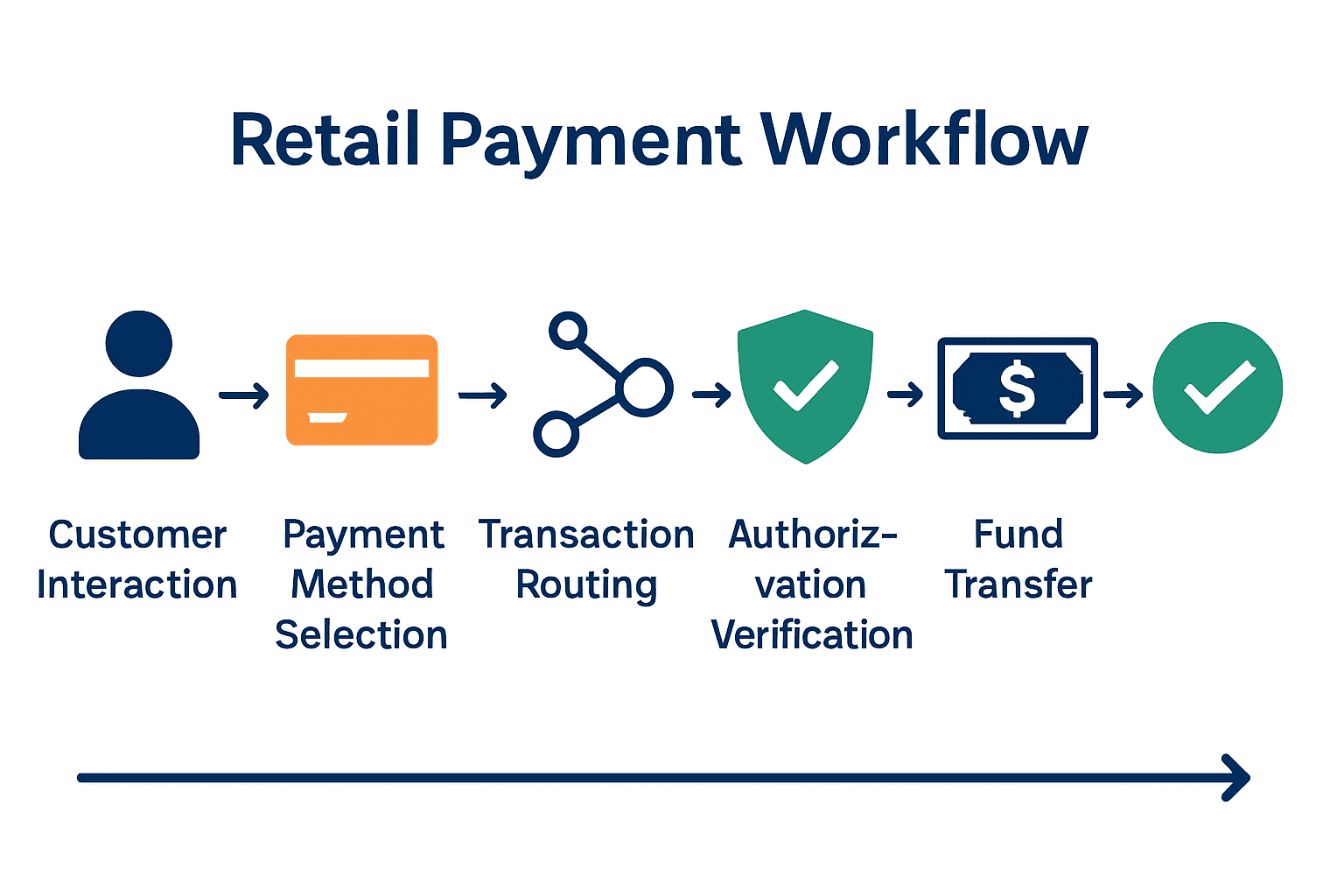
The core components of a retail payment workflow typically include several interconnected stages that ensure smooth, secure transaction processing. These stages encompass customer interaction, payment method selection, transaction initiation, payment authorization, fund verification, and final transaction confirmation.
 SensePass facilitates this process by offering a flexible, processor-agnostic platform that integrates seamlessly with major retail platforms like NetSuite, SuiteCommerce, Shopify POS, and Dynamics 365.
Key workflow elements in modern retail payment systems involve multiple critical touchpoints:
- Customer Interaction: Initial product selection and checkout process
- Payment Method Selection: Choosing from digital wallets, credit cards, BNPL options
- Transaction Routing: Secure transmission of payment information
- Authorization Verification: Real-time validation of payment credentials
- Fund Transfer: Actual monetary transaction between customer and merchant accounts
- Transaction Confirmation: Providing immediate feedback to both customer and merchant
For retailers seeking comprehensive payment integration, our retail payment solutions guide offers deeper insights into creating robust, flexible transaction workflows that adapt to evolving consumer preferences and technological advancements.
Types of Retail Payment Methods Used
Retail payment methods have dramatically expanded beyond traditional cash transactions, offering consumers unprecedented flexibility in how they complete purchases. According to Kansas City Fed, major types of retail payments now encompass diverse transaction categories including in-store purchases, online transactions, bill payments, person-to-person transfers, and payments from businesses or government agencies.
Modern digital payment ecosystems provide retailers with multiple transaction channels. Trade.gov highlights that while credit cards remain the primary online payment method, consumer preferences are rapidly evolving. SensePass supports this diverse landscape by enabling transactions across numerous payment methods, including digital wallets, cryptocurrency, and emerging financing options.
Comprehensive retail payment methods typically include:
Here’s a summary of the main retail payment methods and their features:
| Payment Method Type | Examples | Key Features |
|---|---|---|
| Traditional | Cash Credit cards Debit cards |
Widely accepted Simple process Physical or card-based |
| Digital | Digital wallets BNPL Peer-to-peer apps |
Fast transactions Mobile-friendly Flexible payment options |
| Emerging | Cryptocurrency Contactless Biometric |
Cutting-edge security Innovative technology Rapid adoption in select markets |
-
Traditional Methods
- Cash payments
- Credit cards
- Debit cards
-
Digital Payment Options
- Digital wallets (Apple Pay, Google Pay)
- Buy Now Pay Later (BNPL) services
- Peer-to-peer transfer platforms
-
Emerging Payment Technologies
- Cryptocurrency transactions
- Contactless mobile payments
- Biometric payment systems
For retailers seeking a comprehensive overview of payment method strategies, our guide on retail payment methods provides in-depth insights into selecting and implementing the most effective payment solutions for your business ecosystem.
How Omnichannel Payment Solutions Work
Omnichannel payment solutions create a unified transaction ecosystem that allows customers to seamlessly purchase and pay across multiple channels. According to Fiscal Treasury, digital wallets have revolutionized this process by enabling users to complete transactions using just a username and password, offering unprecedented convenience and security.
The core architecture of omnichannel payment systems involves multiple integrated components that synchronize transaction data across physical and digital platforms. SensePass facilitates this complexity by providing a robust infrastructure that connects point-of-sale systems, mobile applications, online platforms, and backend payment processing networks. This approach ensures that whether a customer purchases through a mobile app, website, in-store terminal, or call center, their payment experience remains consistent and frictionless.
Key operational components of omnichannel payment solutions include:
-
Transaction Synchronization
- Real-time data integration
- Unified customer payment profiles
- Cross-channel transaction tracking
-
Payment Method Flexibility
- Support for multiple payment types
- Instant payment method switching
- Stored payment credential management
-
Security Infrastructure
- End-to-end encryption
- Fraud detection mechanisms
- Compliance with PCI DSS standards
Our comprehensive guide to omnichannel payments provides retailers with deeper insights into implementing these sophisticated payment ecosystems that adapt to evolving consumer preferences and technological innovations.
Key System Integrations and Supported Platforms
Payment system integrations represent the critical infrastructure that enables seamless transaction processing across diverse retail environments. University of Washington Finance demonstrates how comprehensive e-commerce platforms like TouchNet Marketplace can create unified transaction management systems that simplify complex payment operations.
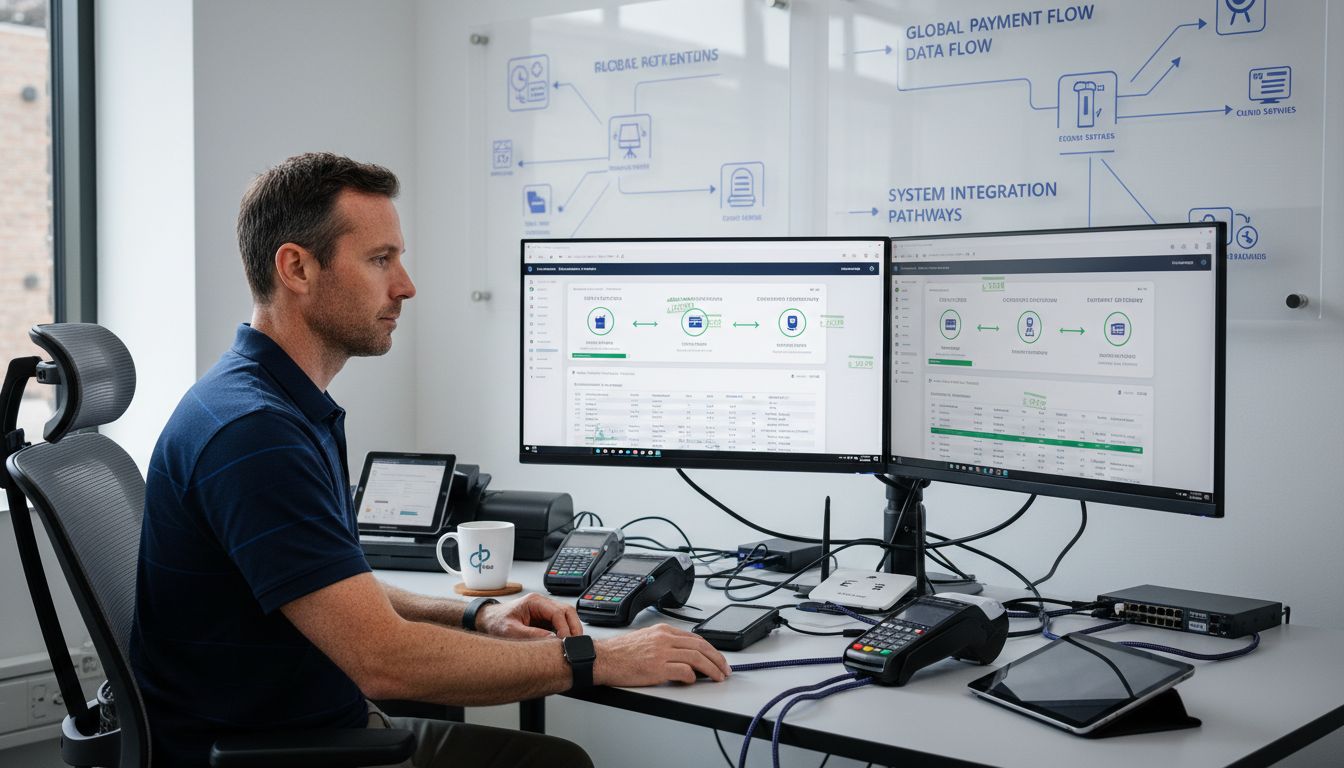
SensePass provides an extensive integration ecosystem supporting major retail platforms and point-of-sale systems. The platform’s architecture enables smooth connections with enterprise-level solutions including NetSuite, SuiteCommerce, Oracle Xstore, Aptos, Shopify POS, BigCommerce, Storis, NCR, and Dynamics 365. This flexible approach allows businesses to maintain their existing technological infrastructure while expanding payment capabilities across multiple channels.
Key platform integration capabilities include:
-
Enterprise Resource Planning (ERP) Integrations
- NetSuite
- Oracle Retail
- Microsoft Dynamics 365
-
Ecommerce Platform Connections
- Shopify
- Magento
- WooCommerce
- BigCommerce
-
Point of Sale (POS) Systems
- NCR
- Micros
- Clover
- Toast
For retailers seeking comprehensive guidance on navigating these complex integration landscapes, our guide to integrated payment systems offers in-depth strategies for selecting and implementing robust payment infrastructures that adapt to evolving technological requirements.
Compliance, Security, and Fraud Prevention
Retail payment security represents a critical infrastructure protecting both merchants and consumers from potential financial risks and unauthorized transactions. George Washington University Treasury emphasizes the importance of strict adherence to payment processing guidelines, highlighting that unauthorized payment methods can compromise an organization’s ability to maintain secure transaction capabilities.
SensePass implements comprehensive security protocols designed to meet the most stringent industry standards. The platform integrates advanced fraud detection mechanisms, end-to-end encryption, and real-time transaction monitoring to prevent unauthorized access and protect sensitive financial data. Bureau of Fiscal Service underscores the critical nature of maintaining robust security standards in digital financial ecosystems.
Key security and compliance strategies include:
-
Regulatory Compliance
- PCI DSS certification
- GDPR data protection
- SOX financial reporting standards
-
Fraud Prevention Techniques
- Machine learning anomaly detection
- Tokenization of payment credentials
- Multi-factor authentication
-
Data Protection Mechanisms
- End-to-end encryption
- Secure cloud infrastructure
- Regular security audits
To gain deeper insights into protecting your payment infrastructure, our comprehensive guide to payment security provides retailers with strategic approaches to maintaining robust, secure transaction environments.
Common Challenges and Optimization Strategies
Retail payment systems face complex operational challenges that require strategic approaches to maintain efficiency and customer satisfaction. Kansas City Fed highlights that understanding the nuanced costs associated with different payment methods is crucial for developing optimized transaction strategies.
SensePass addresses these challenges by providing a flexible, processor-agnostic platform that enables businesses to adapt quickly to evolving payment landscapes. Trade.gov emphasizes the critical importance of understanding local consumer payment preferences as a key strategy for enhancing eCommerce performance and ensuring seamless customer experiences.
Key optimization strategies include:
-
Cost Management
- Reduce transaction processing fees
- Minimize payment method overhead
- Optimize payment routing efficiency
-
Consumer Experience Enhancement
- Diversify payment method offerings
- Implement seamless cross-channel transactions
- Reduce checkout friction
-
Technical Performance
- Real-time transaction monitoring
- Dynamic payment method routing
- Adaptive fraud prevention mechanisms
Our comprehensive guide to retail payment solutions provides retailers with actionable insights for navigating the complex landscape of modern payment technologies and consumer expectations.
Streamline Your Retail Payment Workflow with SensePass
Navigating the complex retail payment workflow process can be overwhelming. From managing multiple payment methods such as digital wallets, BNPL, and crypto, to ensuring smooth integration with your existing POS and eCommerce platforms, retailers face constant challenges in delivering seamless customer experiences. SensePass understands these pain points and offers a processor-agnostic solution designed to simplify every step of your payment workflow. Our platform supports integration with major systems including NetSuite, SuiteCommerce, Oracle Xstore, Aptos, Shopify POS, BigCommerce, Storis, NCR, and Dynamics 365, making it easier than ever to unify your payment channels.
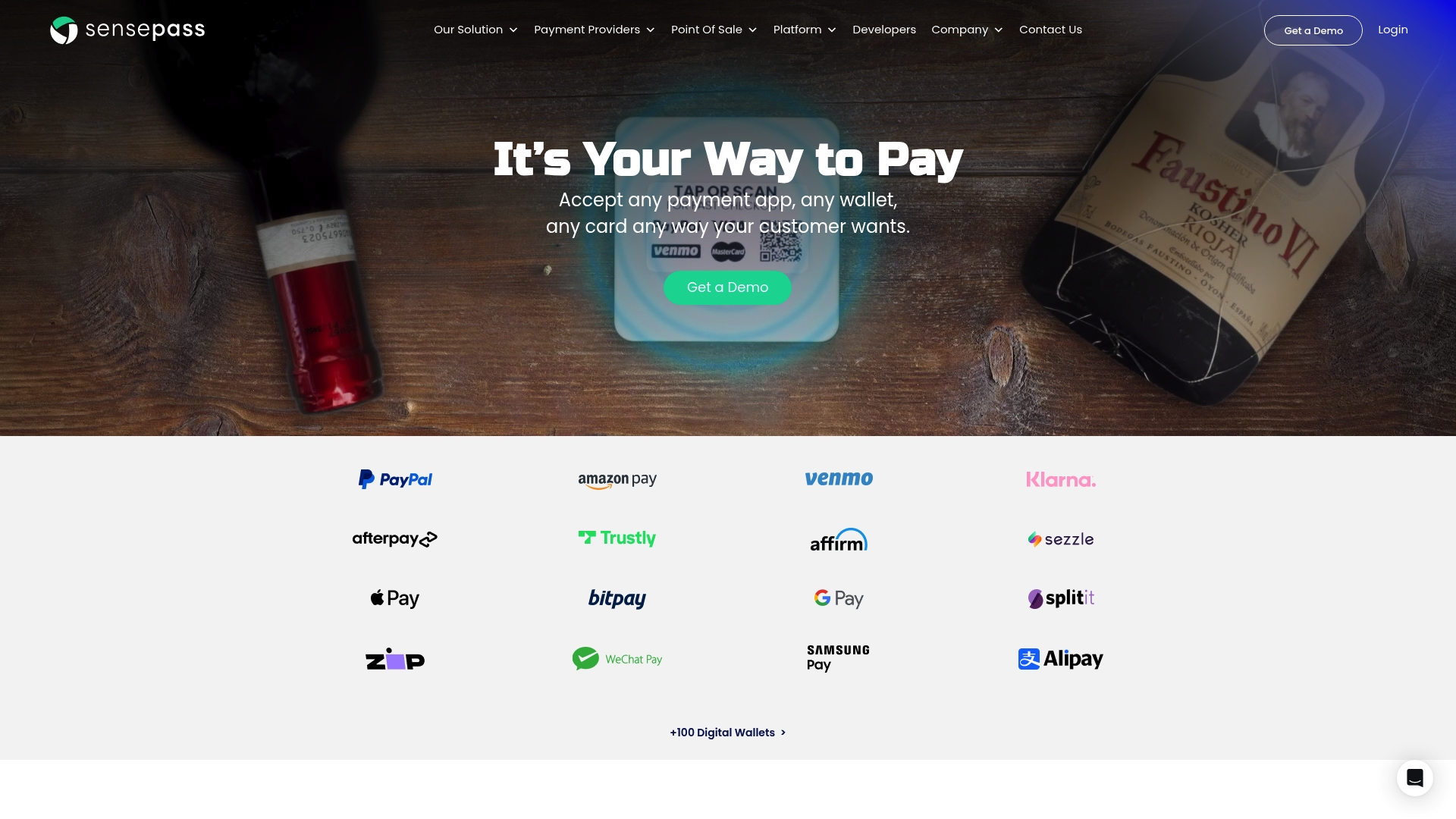
By supporting an extensive range of payment options like PayPal, Venmo, Apple Pay, Klarna, Affirm, BitPay, and Trustly, SensePass empowers your business to offer the payment choices your customers expect today. This flexibility reduces friction at checkout and boosts conversion rates while cutting processing costs. Discover how our omnichannel payment solutions enhance security, scalability, and operational efficiency by visiting SensePass and exploring our retail payment solutions guide.
Looking for a reliable way to optimize your retail payments and overcome workflow hurdles?
Explore how seamless integration and broad payment support combine to transform your retail payment operations. Visit SensePass now and take the first step toward unlocking faster, safer, and more flexible payments.
Frequently Asked Questions
What are the key stages in a retail payment workflow process?
The key stages in a retail payment workflow process include customer interaction, payment method selection, transaction initiation, payment authorization, fund verification, and final transaction confirmation.
How do omnichannel payment solutions enhance customer experience?
Omnichannel payment solutions enhance customer experience by providing a unified transaction ecosystem that allows customers to purchase and pay seamlessly across multiple channels, ensuring a consistent and frictionless payment experience.
What types of retail payment methods are commonly used today?
Common retail payment methods include traditional options like cash, credit, and debit cards, as well as digital payment options such as digital wallets, Buy Now Pay Later (BNPL) services, and emerging technologies like cryptocurrency and contactless payments.
How can retailers optimize their payment systems for efficiency?
Retailers can optimize their payment systems by managing costs, enhancing consumer experience through diverse payment methods, and improving technical performance with real-time monitoring and adaptive fraud prevention mechanisms.
Recommended

 New York Office
260 Madison Ave Suite 8018 New York NY 10016

